Online Homeschooling: A Modern Alternative for Today’s Students

online homeschooling

the past decade, education has quietly gone through a transformation. Classrooms are no longer defined by four walls, a whiteboard, and a fixed timetable. Instead, learning has become more flexible, personalised, and accessible than it was before.

One model that reflects this shift is online homeschooling

For many families, it is not a backup plan or a temporary solution but it is a conscious decision to create a learning environment that better fits their child’s needs. But what exactly does online homeschooling involve? And is it truly comparable to traditional schooling?

Let’s explore it honestly.

What is Online Homeschooling?

Online homeschooling combines structured academic programmes with digital methods. Students would follow an established curriculum, attend interactive online classes, complete assignments, and prepare for official examinations – all while learning from home or another flexible location.

It is important to clarify what online homeschooling is not.

It is not self-study without guidance. 

It is not a collection of random online courses. 

It is not a “lighter” academic route. 

When it is done properly, it follows internationally recognised standards such as IGCSE and A Levels, offered by leading exam boards like Cambridge International and Pearson Edexcel. Students are assessed formally, receive qualified teacher support, and build academic records suitable for university applications worldwide.

The difference lies in the method – not in quality. 

Why Families Are Choosing Online Homeschooling 

1. Flexibility That Respects Student Needs 

Every child learns differently. Some thrive in large classrooms. Others struggle with distractions, social pressures, or rigid schedules.

Online homeschooling allows learning to adapt to the student, not the other way around. 

Students who are pursuing competitive sports, creative arts, entrepreneurship, or who require a different pace of learning often find that flexibility would make a significant difference. This is because they can organise their day more effectively and focus on productivity rather than simply attendance.

Flexibility does not mean a lack of structure. It means structure designed with intention.

2. Personalised Academic Support 

In many traditional schools, teachers manage large groups of students simultaneously. While they work hard to support everyone, individual attention can be limited.

Online homeschooling environments typically offer smaller class sizes and more direct teacher-student interaction. This allows educators to: 

  • Identify strengths and weaknesses early 
  • Provide targeted feedback 
  • Adjust teaching methods 
  • Monitor progress closely 

Students would often feel more comfortable asking questions in smaller or virtual settings. Over time, this would build confidence and academic clarity.

3. Internationally Recognised Qualifications 

online homeschooling

One of the biggest concerns parents have is whether online homeschooling will limit university options.

The answer depends on the programme.

If students are enrolled in a structured, accredited curriculum leading to recognised qualifications such as IGCSE and A Levels, they remain fully eligible for universities in the UK, Australia, Europe, Asia, and beyond.

Universities focus on results and academic readiness – not where learning took place. As long as students meet academic requirements, their pathway remains open.

Online homeschooling does not reduce opportunity when it is properly structured. 

4. Development of Independence and Responsibility

One of the most powerful, yet often overlooked, benefits of online homeschooling is character development. 

Students will learn to:

  • Manage their time effectively 
  • Set personal study goals 
  • Take responsibility for deadlines
  • Communicate proactively with teachers 
  • Study independently 

These are not just academic skills. They are life skills. 

University environments, in particular, require independence. Students who have already learned to organise their own study schedules would often transition more smoothly into higher education.

Is Online Homeschooling Easier? 

This is a common misconception.

Online homeschooling is not easier. It is different. 

Students are still required to: 

  • Complete assignments 
  • Sit for formal examinations 
  • Revise independently 
  • Meet academic requirements 

In fact, the flexibility of online learning can sometimes require greater discipline. Without a physical bell ringing between classes, students must develop their own internal motivation.

For motivated learners, this environment can be empowering. For others, it requires guidance and strong parental support.

Success depends less on the format and more on commitment. 

Socialisation: A Common Concern 

online homeschooling

Parents often worry about social development. After all, traditional schools provide daily face-to-face interaction.

Online homeschooling does not eliminate socialisation, it simply changes how it happens.

Students may interact through: 

  • Live virtual classes 
  • Group discussions 
  • Collaborative projects 
  • Extracurricular activities outside academics 
  • Community programmes or clubs 

In many cases, online homeschooling allows students to build social circles that align with their interests rather than limiting interaction to a fixed group of friends.

Social development remains possible, but it may require intentional planning. 

Who Thrives in Online Homeschooling? 

Online homeschooling tends to work particularly well for students who:

  • Prefer focused, distraction-free environments 
  • Are self-motivated or willing to develop discipline 
  • Need schedule flexibility 
  • Feel overwhelmed in large school settings 
  • Want to balance their academics with other commitments 
  • Prefer smaller learning communities 

However, no single model suits everyone. Some students thrive in traditional school environments filled with daily structured and constant peer interaction.

The key is understanding your child’s personality, strengths, and long-term goals.

The Bigger Picture: Education Is Evolving 

The idea that education must happen in one specific format is becoming outdated. Technology has expanded access to quality learning, making it possible to deliver challenging academic programmes beyond physical campuses.

Online homeschooling is not about rejecting traditional education. It is about recognising that students are diverse – and education should reflect that diversity.

For some families, it offers: 

  • Greater flexibility 
  • Strong academic preparation 
  • Personalised support 
  • International recognition 
  • Balanced lifestyle opportunities 

For others, it may not be the right fit.

The important thing is informed decision-making. 

Speak With Our Admissions Team 

Choosing the right educational pathway is an important decision.

If you’re considering online homeschooling, our Admission Team is here to guide you through the curriculum, academic expectations, and university pathways.

Contact our Admissions Team today to schedule a consultation and learn how Jakarta Academics can support your child’s future.
Recent Post

From Jakarta to Paris: The Journey of a Jakarta Academics Alumna Now Studying at Université Paris-Saclay

Every student’s journey looks different. For some, having the flexibility to learn in a way that suits them best can open doors to opportunities around the world.

At Jakarta Academics, education is designed with that flexibility in mind. As an international homeschooling hybrid school using the Pearson Edexcel curriculum, Jakarta Academics allows students to choose whether they want to attend classes onsite or online, while still following internationally recognised academic standards

For Cherienoel Yazzana Pada, this flexible learning environment became an important part of her academic journey. Today, she is continuing her studies in Economics at Paris-Saclay University, one of Europe’s leading universities.

Learning in a Way That Fits the Student

At Jakarta Academics, students are not limited to one way of learning. Some prefer attending classes onsite, while others join online. This flexibility allows students to choose the learning environment where they feel most comfortable and productive.

We welcome students from Grade 1 to Grade 12, offering globally recognised qualifications such as IGCSE and A-Level. These programs are widely accepted by universities around the world and help students build a strong academic foundation for their future studies.

Another key difference is the approach to time. Instead of following a rigid schedule, students are given more flexibility in how they manage their learning. This encourages them to develop independence, discipline and responsibility. These are skills that are especially valuable when preparing for university life.

Taking the Next Step Abroad

After completing her A-Level studies at Jakarta Academics, Cherienoel decided to continue her academic journey overseas. With the strong foundation she had built during her studies, she successfully gained admission to Paris-Saclay University, where she is now pursuing a degree in Economics.

Located just outside Paris, France, Paris-Saclay is widely recognised as one of the world’s leading research universities. In the Academic Ranking of World Universities (Shanghai Ranking), the university has been ranked 13th in the world, making it the highest-ranked university in France and continental Europe.  

The university is known for bringing together several prestigious institutions and research centres, which create a dynamic academic environment that attracts students and researchers from across the globe. For students interested in fields such as economics, mathematics, and science, Paris-Saclay offers an intellectually stimulating environment where innovation and collaboration and collaboration thrive.

For Cherienoel, continuing her studies there marks an exciting new chapter, one that began with the academic preparation and flexibility she experienced during her time at Jakarta Academics.

A Journey That Opens Global Opportunities

Stories like this highlight what the right learning environment can make possible. At Jakarta Academics, education is designed to support students not only academically, but also in developing independence, confidence, and a global mindset.

With flexible learning options, internationally recognised programmes such as IGCSE and A-Level, and an approach that allows students to learn in the way that suits them best, Jakarta Academics aim to prepare students for opportunities beyond the classroom. Whether their goals involve pursuing higher education abroad, exploring new interests, or building future careers, students are supported in taking meaningful steps toward those ambitions.

As education continues to evolve, more families are looking for learning environments that combine academic quality with flexibility and real-world readiness. Jakarta Academics offers a pathway designed to meet those needs while helping students prepare for a global future.

If you would like to learn more about the programmes and learning approach at Jakarta Academics, contact our Admission Team to explore how we can support your child’s educational journey.

Homeschooling in Jakarta: How Students Stay Social, Active, and Connected

When parents begin exploring homeschooling in Jakarta, one question often comes to mind:

“Will my child still have opportunities to socialise?”

It’s a completely understandable concern. School is not just where children study – it’s also a place where children build friendships, learn to collaborate with others, and develop confidence through everyday interactions.

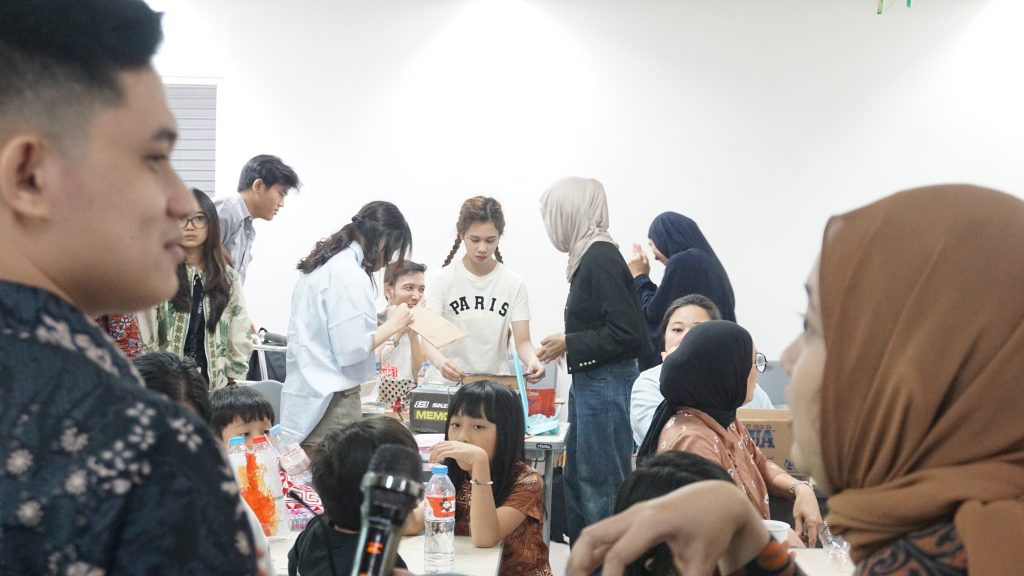
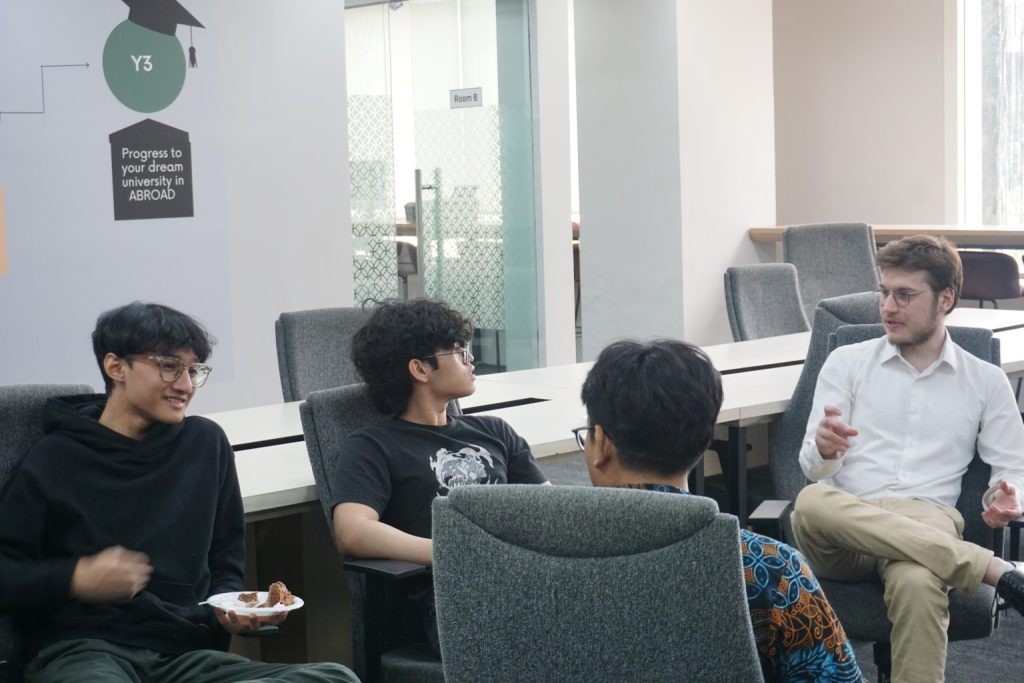
At Jakarta Academics, we believe homeschooling should never feel isolating. That’s why our program combines flexible academic learning with regular enrichment activities, allowing students to stay socially connected while benefiting from a personalised education.

In other words, students enjoy the flexibility of homeschooling without missing out on the social side of learning.

A Space for Students to Connect

A common misconception about homeschooling is that students spend most of their time learning alone. In reality, when designed well, homeschooling can offer many opportunities for social interaction.

At Jakarta Academics, our enrichment program allows students to meet regularly, spend time together, and build friendships outside their academic sessions.

These activities create a relaxed and welcoming environment where students can:

  • interact with peers
  • develop teamwork and communication skills
  • form friendships beyond the classroom

For many students, these moments become some of the most enjoyable parts of their learning journey.

Staying Active Through Sports

Physical activities are an important part of both social development and overall wellbeing. Through our enrichment program, students regularly participate in sports together, including:

  • Tennis
  • Futsal
  • Basketball
  • Badminton

Sports naturally encourage teamwork, communication, and confidence. Whether students are playing competitively or simply enjoying the game together, these activities provide a space where friendships will grow naturally.

Sometimes, the best connections happen off the screen and on the court.

Learning Practical Life Skills: Financial Literacy

Education should also prepare students for life beyond school. That’s why our enrichment program includes sessions on financial literacy.

Students are introduced to essential concepts such as:

  • understanding money and spending habits ● basic saving and budgeting principles
  • developing responsible financial behaviour

These lessons help students begin building the awareness and independence they will need as they move toward university and adulthood.

A Balanced Homeschooling Experience

At Jakarta Academics, homeschooling is designed to support both academic success and personal development.

Students benefit from flexible learning while still having opportunities to:

  • socialise with peers
  • stay physically active
  • develop real-world skills

This balanced approach ensures students are not only prepared for university, but also growing into confident, well-rounded individuals.


For parents exploring homeschooling options in Jakarta, this means knowing that their child is part of a learning environment where they can study, connect, and grow together.


Speak With Our Admission Team

Every child’s learning journey is different, and choosing the right education pathway is an important decision.

If you would like to learn more about homeschooling at Jakarta Academics, our Admission Team would be happy to guide you through the program, enrichment activities, and university preparation pathways.

Contact our Admissions Team today to schedule a consultation and discover how Jakarta Academics supports both academic success and meaningful student experiences.

sekolah internasional Bali

Anak Kurang Mendapat Perhatian di Kelas Besar? Microschool Kini Hadir di Bali

Pernah merasa anak kita sebenarnya pintar, tapi seperti tenggelam di kelas yang terlalu ramai? Guru baik, fasilitas oke, tapi karena muridnya banyak, perhatian jadi terbagi. Akhirnya anak yang butuh support lebih malah jadi kurang terpantau.

Kalau ini yang sedang Anda rasakan, mungkin sudah waktunya kenal lebih dekat dengan konsep microschool  dan kabar baiknya, sekarang sudah hadir di Bali.

Kenapa Kelas Besar Jadi Tantangan?

Di sekolah konvensional, satu kelas bisa diisi 25–35 siswa. Artinya, waktu guru untuk setiap anak sangat terbatas.

Beberapa hal yang sering terjadi:

  • Anak yang pemalu jadi makin diam
  • Anak yang cepat belajar jadi kurang tertantang
  • Anak yang butuh waktu lebih jadi tertinggal
  • Guru fokus ke kurikulum, bukan kebutuhan personal

Bukan berarti sistem lama salah. Tapi faktanya, setiap anak itu beda. Gaya belajar beda. Kecepatan paham beda. Minatnya pun beda.

Microschool: Sistem Belajar dengan Perhatian Lebih Personal

Microschool hadir dengan konsep kelas kecil (small group), biasanya hanya beberapa siswa dalam satu kelas. Dengan jumlah murid yang lebih sedikit, guru bisa benar-benar mengenal setiap anak.

Di JA School Bali, pendekatan ini dibuat supaya:

  • Anak lebih percaya diri untuk bertanya
  • Guru bisa menyesuaikan cara mengajar sesuai karakter siswa
  • Pembelajaran lebih interaktif, bukan hanya duduk dan mendengar
  • Fokus bukan cuma nilai, tapi juga perkembangan karakter dan skill

Jadi bukan sekadar sekolah kecil, tapi sistem belajar yang lebih dekat dan lebih peduli.

Cocok untuk Anak Seperti Apa?

Microschool biasanya sangat cocok untuk:

  • Anak yang butuh perhatian lebih
  • Anak yang cepat bosan di kelas besar
  • Anak yang punya minat khusus dan ingin dikembangkan
  • Orang tua yang ingin lebih terlibat dalam perkembangan anak

Karena suasananya lebih nyaman dan tidak terlalu formal, anak biasanya lebih enjoy. Belajar jadi terasa seperti eksplorasi, bukan tekanan.

Kenapa Microschool Jadi Tren di Bali?

is IGCSE difficult

Bali punya komunitas yang unik banyak keluarga lokal maupun internasional yang mencari sistem pendidikan fleksibel, global, dan tetap personal.

Orang tua sekarang tidak hanya bertanya: “Nilainya berapa?”

Tapi juga: “Anak saya berkembang tidak? Dia percaya diri tidak? Dia siap menghadapi masa depan tidak?”

Microschool menjawab pertanyaan itu dengan pendekatan yang lebih relevan dengan kebutuhan zaman sekarang.

Belajar Lebih Dekat, Berkembang Lebih Cepat

Bayangkan anak Anda berada di lingkungan belajar yang:

  • Gurunya benar-benar mengenal karakternya
  • Punya ruang untuk bertanya dan berekspresi
  • Tidak merasa tertinggal atau terlalu tertahan
  • Didorong untuk berpikir kritis dan mandiri

Itulah tujuan microschool hadir di Bali.

Karena pada akhirnya, pendidikan bukan soal siapa yang paling cepat selesai materi. Tapi siapa yang paling siap menghadapi masa depan.

Kalau Anda ingin tahu apakah sistem microschool cocok untuk anak Anda, mungkin sekarang waktu yang tepat untuk cari tahu lebih jauh.

Karena setiap anak berhak mendapatkan perhatian yang cukup — bukan hanya tempat duduk di kelas.