IGCSE qualification for a better future

IGCSE stands for International General Certification of Secondary Education. It’s an international secondary qualification equivalent to UK’s GCSE or O Levels (Ordinary Level). It is offered by three different exam boards including Cambridge Examinations, Pearson Edexcel and Oxford AQA. Students with IGCSE qualifications are recognised worldwide including at top universities such as Oxford, Harvard, MIT, Stanford, etc.

Edexcel International GCSEs are versions of the UK regulated GCSEs, with content and assessment specifically for international learners. Designed to be engaging, internationally appropriate and of equivalent standard to the UK versions, Edexcel International GCSEs provide students with the skills and knowledge they will need to successfully progress to A Levels, onto university and into employment.

Developing world-class students with IGCSE qualification

  • Here are just some of the reasons why more than 100,000 learners across Asia, Africa, Europe, the Middle East and Latin America choose to study Edexcel International GCSEs:
  • Edexcel International GCSEs are currently available in 40 subjects, offering more choice to students wanting to study a variety of topics.
  • Edexcel International GCSEs help students apply to study and work across the world. Recognised by employers and educators worldwide, they are equivalent, the grade for grade, to UK GCSEs, with the same status for university entry requirements.

Supporting progression to further study

Edexcel International GCSEs have been designed to support progression to further study, including A levels and beyond. UK Universities are familiar with and support the new 9–1 grading scale for university admissions, alongside GCE A Level / International Advanced Level (IAL) qualifications.

The UK government and UK NARIC (UK National Agency for the Recognition and Comparison of International Qualifications and Skills) continue to communicate with Universities and Government Ministries across the world endorsing the new 9–1 grading scale. We support this effort, to ensure that the updated Edexcel International GCSEs go on providing a clear progression pathway to global universities.

IGCSE is designed for international students

Edexcel International GCSEs that are valued by teachers and students to have included more international topics and examples, using local contexts where possible. This is to ensure that the content of the qualifications is even more relevant and engaging for students around the world, allowing for learning in a local context to a global standard. We have also updated qualification content to reflect the latest thinking in each subject.

“It is like a global passport, it offers me worldwide recognition and I can go anywhere with my Edexcel qualifications.”

Nikita Jha

Pearson Edexcel International

GCSE student at Sayfol International School, Malaysia

Recent Post

What If School Focused More on What Your Child Actually Needs?

Choosing a school for your child in Bali is not always about finding the school with the biggest facilities or the longest schedule. For many parents, especially expat families living in Bali, there is another question that may matter more:

Is my child really getting what they need from school?

Of course, children need a strong academic foundation. They need to learn Maths, English, Science, and other core subjects that will support them throughout their education.

But at the same time, children also need to learn how to think, communicate, make decisions, work with others, and become more independent.

So, does school always need to mean more subjects, longer hours, and more homework?

Maybe not. For some children, a more focused and personalised approach can create a better learning experience.

It’s Not Always About More, but About Better Focus

A long school day with a wide range of subjects can certainly look comprehensive. But spending more time at school does not always mean children are learning more effectively.

Every child has a different ability to focus. When they spend the whole day moving from one lesson to another, completing assignments, and then coming home to more homework, there may be very little time left to rest or do the things they genuinely enjoy.

Children also need space to grow beyond textbooks and exams.

A more focused approach does not mean taking education less seriously. In fact, it means using learning time more intentionally – making sure children understand what matters, receive enough attention from their teachers, and have the opportunity to learn in a way that works for them.

Core Subjects Still Matter

Personalised education does not mean academics become less important.

Maths, English, Science, and other core subjects remain an important part of a child’s education. What can make a difference is how those subjects are taught.

In a smaller class, teachers have more opportunities to understand how each student learns. Children also have more space to ask questions, take part in discussions, and receive support when they find something challenging.

They are not simply expected to complete the material. They are encouraged to actually understand what they are learning.

For some children, this kind of environment can make learning feel calmer, more focused, and more purposeful.

Children Also Need to Learn Things That Aren’t in a Textbook

Academic results matter. But parents are not only preparing their children for exams. They are also preparing them for life.

How does your child communicate with others?

Can they work as part of a team?

Are they comfortable expressing their ideas?

How do they respond when things do not go as planned?

Can they manage their time and take responsibility for their own tasks?

These are not always skills that children develop through textbooks alone.

That is why Life Skills can be an important part of a child’s education.

At JA School Bali, Life Skills are part of the learning experience, helping students develop practical skills they can use not only at school, but also in everyday life.

Giving Children Space to Discover Their Interests

Every child is interested in different things.

Some enjoy sports. Others may be interested in art, technology, business, music, or creating things with their hands.

Not every interest needs to become a school subject.

Sometimes, children simply need the time and space to explore.

Through the Passion Project, students at JA School Bali have the opportunity to explore something they genuinely care about, develop their own ideas, and take greater responsibility for their learning.

Experiences like these can help children discover what they enjoy, what they are good at, and what they may want to explore further.

Small Classes Can Make a Difference

Class size is another factor worth considering when choosing a school.

In a large classroom, it can be difficult for a teacher to give the same level of attention to every student.

In a smaller class, teachers can get to know each child more closely. They can notice when a student is struggling, understand how they learn best, and provide more appropriate challenges when they are ready to move further.

At JA School Bali, small classes are part of the personalised learning approach.

The goal is not simply to have fewer students in a classroom, but to create an environment where every child is known, supported, and given more personal attention.

An International School Is About More Than the Curriculum

For expat families, choosing a school with an international curriculum is naturally an important consideration.

But the curriculum is only one part of the school experience.

The learning environment matters too.

How do teachers interact with students? Do children receive enough individual attention? Do they have space to explore their interests? Do they feel comfortable asking questions and expressing their ideas?

JA School Bali follows the Pearson Edexcel International Curriculum in an English-speaking learning environment.

However, the experience goes beyond academics. Students also have opportunities to develop Life Skills, Passion Project, and Sport Day as part of their overall school experience.

Children Still Need Time Outside the Classroom

For families living in Bali, a child’s life does not stop when the school day ends.

There are sports, hobbies, family time, and other activities that are also important to a child’s development.

That is why the school schedule is worth considering too.

A more focused school approach can give children room to enjoy life outside the classroom without compromising their academic foundation.

They can continue learning their core subjects while also having time to explore their interests, stay active, spend time with friends and family, and simply enjoy being a child.

Is This Approach Right for Every Child?

Of course, there is no single school model that works for every child.

Some children enjoy a large school with a wide range of activities and a busy schedule.

Others may thrive in a smaller, calmer environment where they receive more personal attention.

If your child tends to feel overwhelmed by a packed school schedule, needs more individual support from teachers, or has interests they would like more time to explore, a more focused approach to education may be worth considering.

In the end, the question is not always:

Which school offers the most?

Perhaps the better question is:

Which school is the right fit for what my child actually needs?

A Different Way to Learn in Bali

JA School Bali is an International Microschool in Bali with the Pearson Edexcel International Curriculum, combining academic learning with a more personalised approach.

Students learn core subjects in small classes, receive personalised learning, and have opportunities to develop through Life Skills, Passion Project, and Sport Day.

The approach is not about making children learn less.

It is about making their learning time more focused, personal, and meaningful.

For expat families looking for a school in Bali that offers a more focused and personalised approach while maintaining a strong academic foundation, JA School Bali may be worth considering.

Because education is not only about how much children learn.

It is also about how they learn, who they are becoming, and whether they have enough space to become themselves.

If you are looking for a school in Bali and want to explore whether a more personalised approach could be the right fit for your child, visiting JA School Bali can be a good place to start.

Schools Built by Educators: Putting Students at the Center

Education today can sometimes look increasingly like a business.

Advertisements are everywhere. Schools set annual targets, compete with one another, promote new facilities, and introduce programs that are presented as unique selling points. In some cases, the competition becomes less about the quality of education itself and more about which school has the most impressive features.

But in the middle of all this competition, are we losing sight of what a school is actually supposed to be?

A school exists to educate children.

It exists to help them learn, grow, discover their abilities, develop confidence, and understand who they are and what they can contribute to the world.

When Education Starts Looking Like a Product

A school may have an excellent curriculum, impressive facilities, and a large number of international or expatriate teachers. But the real question should be: Are these things actually what students need?

Having international teachers, for example, can certainly bring valuable perspectives and experiences into a classroom. But hiring someone simply because they are an expatriate or because they fit the image of an “international school” does not automatically mean students are receiving a better education.

The same applies to facilities and programs.

A school can have a long list of extracurricular activities, advanced technology, competitions, international programs, and impressive facilities. But if those things do not meaningfully contribute to a student’s learning or development, then their presence alone should not define educational quality.

Education should not be about collecting features.

It should be about understanding students.

Are Students Being Supported or Used to Build a School’s Reputation?

Consider academic and extracurricular achievements.

A school may proudly announce that its students have participated in numerous competitions and won multiple awards. Those achievements are certainly worth celebrating.

But there is another question worth asking:

Why did the school support those students in the first place?

Did educators genuinely recognize a student’s potential and provide the guidance, resources, mentorship, and encouragement needed to develop it?

Or were those achievements primarily valuable because they could strengthen the school’s reputation?

There is an important difference between supporting students because they have potential and supporting students because their achievements benefit the institution.

A student should not have to become a trophy for a school to deserve support.

Every student deserves to be seen as an individual.

Shouldn’t Schools Start With What Students Actually Need?

Schools inevitably compete. Parents compare schools. Institutions have targets and reputations to maintain.

But education should not become a competition in which every student is expected to fit the same definition of success.

Not every student will win an international competition.

Not every student will become an academic high achiever.

Not every student will excel in mathematics, science, languages, sports, or the arts.

And that is okay.

Students have different strengths, different learning styles, different interests, and different ways of developing.

The responsibility of a school should be to help students discover those strengths—not simply to reward the students who already fit the system.

Schools Built by Educators

This is where the idea of a school built by educators becomes important.

Imagine a school that was created not primarily from a business opportunity, but from the concerns of educators who have spent years observing what students actually need.

A teacher may see something that a standardized system overlooks.

A student who is struggling academically may not necessarily lack ability. Perhaps the teaching approach does not match the way they learn. Perhaps the classroom environment is too large. Perhaps they need more individual attention. Perhaps they are struggling with confidence. Or perhaps their strengths simply exist outside the traditional academic subjects being measured.

These questions matter.

Because when a student struggles, the first question should not always be:

“What’s wrong with the student?”

Sometimes we need to ask:

“Is the system giving this student the right environment to succeed?”

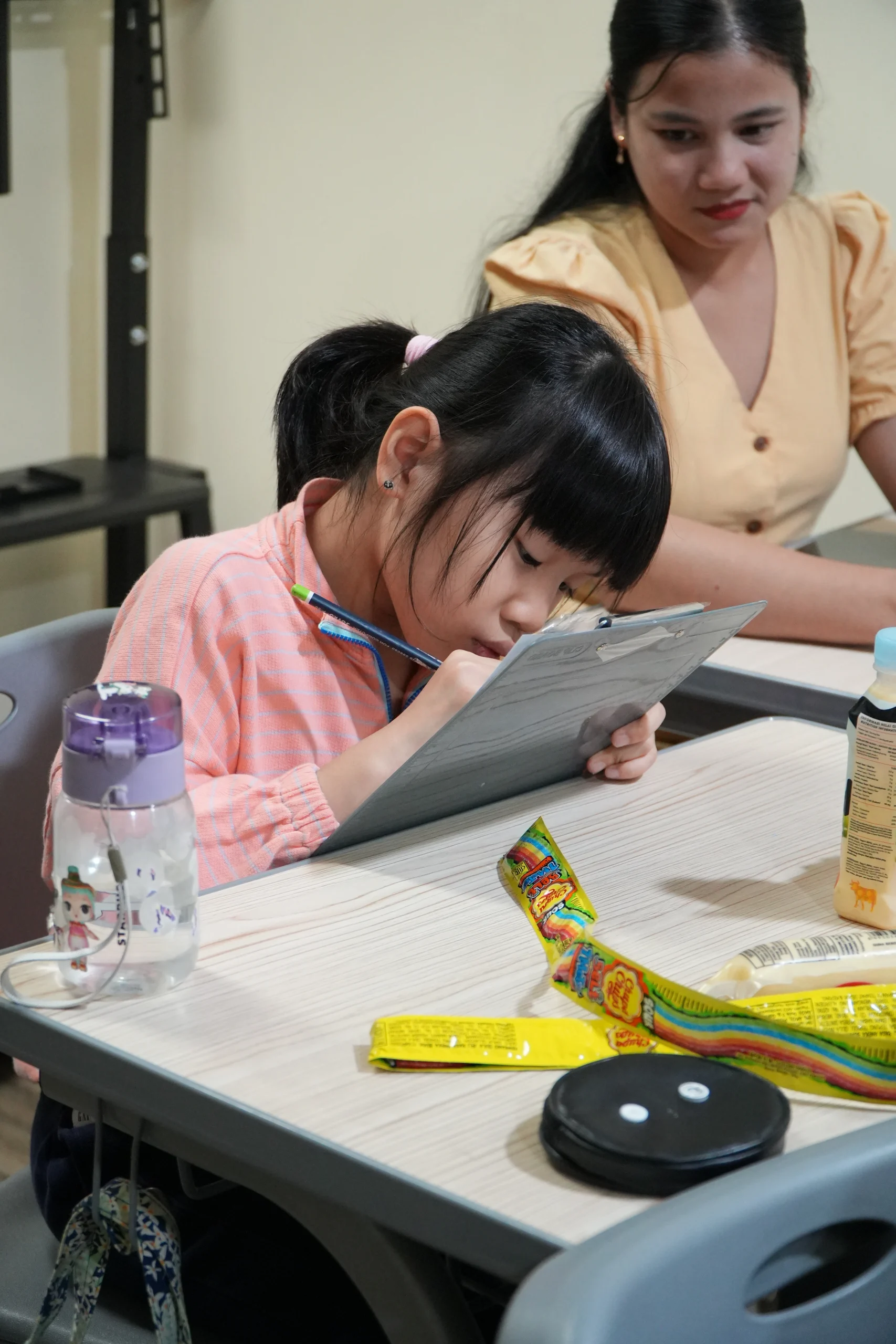
Can One Teacher Truly Teach 20 Different Students in the Same Way?

Consider a classroom with 20 students.

Twenty different personalities.

Twenty different levels of understanding.

Twenty different interests.

Twenty different ways of processing information.

Twenty different strengths and challenges.

Can one teacher realistically expect all 20 students to learn effectively through exactly the same approach?

Of course, teachers work hard to differentiate instruction. But class size and classroom structure still matter.

When a student loses focus, performs poorly, and eventually receives the label of being “weak” or “unmotivated,” it is worth looking beyond the student’s grades.

Was the learning environment appropriate?

Did the student receive enough attention?

Was the material delivered in a way that made sense to them?

Did they have opportunities to ask questions, explore ideas, and learn through their own strengths?

Sometimes the problem is not simply the learner.

Sometimes we need to examine the learning environment itself.
Education Is More Than 1 + 1 = 2

Traditional education often places a strong emphasis on measurable academic outcomes.

And academic knowledge absolutely matters.

Students need literacy, numeracy, scientific understanding, critical thinking, communication skills, and many other forms of knowledge.

But education cannot stop there.

As students grow, they also begin asking much bigger questions:

What am I good at?

What do I actually enjoy?

What kind of person do I want to become?

What is my purpose?

What problems do I care about?

What kind of future do I want to build?

Real life is more complicated than 1 + 1 = 2.

A good education should prepare students not only to answer questions on a test, but also to navigate questions that do not have a single correct answer.

Discipline Should Have a Purpose

This also raises questions about how schools define discipline.

Uniforms should be neat.

Students should follow reasonable rules.

Schools need structure.

But when rules focus heavily on appearance, such as haircuts, hairstyles, or other forms of presentation we should also ask:

What educational purpose does this rule serve?

If a student’s haircut has no meaningful connection to their ability to learn, think, collaborate, or grow, why should it become a major measure of discipline?

Discipline should help students develop responsibility, respect, self-management, and consideration for others.

Rules should have a purpose.

Education should not be about controlling students simply because they are easier to manage when everyone looks and behaves exactly the same.

Student Centered Education Starts With Listening

Being student centered does not mean allowing students to do whatever they want.

It does not mean removing academic standards.

And it does not mean abandoning discipline.

Instead, student-centered education means understanding that the student is the reason the school exists in the first place.

It means asking:

  • What does this student need to learn?
  • How does this student learn best?
  • What are their strengths?
  • Where do they need support?
  • What motivates them?
  • What interests them?
  • What challenges are preventing them from progressing?
  • How can we help them develop their potential?

These questions shift the focus from “How do we make students fit our system?” to “How can we build an educational environment that helps students grow?”

Every Student Deserves the Opportunity to Be Supported

Perhaps the biggest principle is simple:

Every student deserves access to meaningful education and support.

Not only the students who win competitions.

Not only the students with high grades.

Not only the students who make the school look successful.

Every student.

A student’s potential may not always be visible through a report card.

Some students may be excellent problem-solvers.

Some may be natural leaders.

Some may be creative thinkers.

Some may be empathetic collaborators.

Some may discover their strengths later than others.

The role of educators is not necessarily to decide who is talented and who is not.

It is to create the conditions in which students have the opportunity to discover what they can become.
Bringing the Essence of School Back

Perhaps the future of education should not be about which school has the longest list of facilities, the most impressive marketing campaign, or the largest collection of achievements.

Perhaps we should return to a simpler question:

Is this school genuinely helping its students grow?

A school built by educators should begin with that question.

Curriculum matters.

Facilities matter.

Teachers matter.

Technology matters.

Achievements matter.

But none of these should become more important than the students themselves.

Because at the heart of education, there is no product to sell.

There is a person to develop.

And perhaps that is the essence of school we should never lose.


Raising Expat Children in Bali: What Should They Really Look for in a School?

Bali has become home to many families from different countries. Children growing up here can have a very different experience compared to those who have spent their childhood in the same city or country.

At school, they may meet friends from Indonesia, Australia, Russia, Europe, and many other countries. They may hear several languages throughout the day, experience different cultures, and become accustomed to the idea that everyone can have a different way of living.

At first glance, this sounds like an ideal experience.

But there is one thing parents sometimes overlook:

Does their child’s learning environment also help them grow and thrive in the middle of all this diversity?

Expat Children Need More Than an English-Speaking School

When looking for a school in Bali, many expat parents naturally consider an English-speaking environment. This is important, especially if their child plans to continue their education within an international education system.

However, an international school is not only about using English in the classroom. Children also need to feel comfortable asking questions, expressing their opinions, working with others, and being themselves.

When children grow up in a multicultural environment, these abilities become even more important. They may have friends from different cultural backgrounds, and their ways of thinking may be different. Even something that seems normal to one child may not necessarily be viewed the same way by another.

This is where a more personalised learning experience can make a difference.

What About Russian Expat Families in Bali?

Bali has a diverse international community, and Russian families are also part of that community. For Russian families living in Bali, for example, their children’s educational journey may involve more than one education system.

One child may have previously studied within the Russian education system before continuing their education internationally in Bali. Another may have grown up in an English-speaking environment from an early age.

Every child has a different experience. Because of this, schools cannot always use the same approach for every student.

What matters more is whether teachers understand where each child is in their learning journey and what they need to continue developing.

When Children Come from Different Educational Backgrounds

Imagine a classroom with several students who have different educational experiences.

Some may be very confident speaking English. Others may understand the material quickly but still feel hesitant to express their opinions. Some may have strong academic abilities but need more time to adjust to a new environment.

In a very large class, differences like these can be more difficult to notice. In small classes, however, teachers have a greater opportunity to get to know each student.

It is not only about knowing their grades, but also understanding how they learn, what they enjoy, and which areas may still require additional support.

An International Curriculum, But Still Personal

For expat families, an international curriculum is naturally one of the key considerations.

At JA School Bali, students follow the Pearson Edexcel International Curriculum in an English-speaking environment.

However, an international curriculum still needs to be delivered in a way that keeps children engaged in their learning.

Every child has a different pace, interests, and learning style.

Through personalised learning, teachers can provide attention that is better suited to each student’s individual needs.

The goal is not to make learning easier.

Instead, students continue to receive academic challenges while having the support they need to learn and grow effectively.

Children Also Need Space to Be Themselves

For children growing up in an international community, school can also be a place where they develop their identity and confidence.

They need opportunities to try new things. Perhaps they are interested in art, coding, sports, photography, music, or entrepreneurship. This is why the school experience should go beyond lessons and exams.

At JA School Bali, students also take part in Passion Project and Life Skills as part of their learning experience.

Through activities like these, students have opportunities to explore their interests, learn to make decisions, manage their time, work with others, and take responsibility for what they do.

A Multicultural School Should Also Help Children Adapt

One of the benefits of growing up in a multicultural environment is that children learn that the world is not limited to one way of thinking.

However, diversity can also come with its own challenges. Children need to learn how to communicate with people who may be different from them.

How do you express your opinion without putting someone else down?

How do you work in a group when everyone has different ideas?

How do you respond when someone does not have the same habits or customs as you?

These abilities may not always appear on a report card. However, they can become extremely valuable when children continue their education at university or enter an increasingly global workplace.

JA School Bali: International Learning with a More Personal Approach

JA School Bali combines the Pearson Edexcel International Curriculum, an English-speaking environment, small classes, and personalised learning.

With smaller class sizes, teachers have more opportunities to get to know students personally and provide more individual attention.

Beyond academics, students also gain experience through Passion Project, Life Skills, and Sport Day.

This approach is designed to help students develop more than just academic knowledge. It also supports their confidence, independence, communication skills, and ability to adapt.

For children growing up in an international environment, education is not simply about preparing them for one country.

They are preparing for a much bigger world.

Choosing a School for an Expat Child in Bali

Ultimately, there is no single school that is right for every child.

Every family has different needs, and so does every student.

For expat parents, perhaps the question is not only:

“Is this an international school?”

It could also be:

“Will my child be seen, supported, and given room to grow here?”

An international curriculum provides the foundation.

But the right learning environment can help children develop the confidence to make the most of it.

And for children growing up in Bali, surrounded by an increasingly multicultural world, the ability to learn, adapt, and remain true to themselves may be one of the most valuable things they can take with them.

If you are looking for an international school in Bali for your child and want to see how personalised learning works in a smaller learning environment, you are welcome to visit JA School Bali and experience the learning environment firsthand.