Meet Ryukane: One of Jakarta Academics’ Top IGCSE Performers in 2026

When people hear the words homeschooling or online learning, one common misconception often comes up:

“Can students really achieve strong academic results if they are not learning in a conventional school environment?”

The answer is yes.

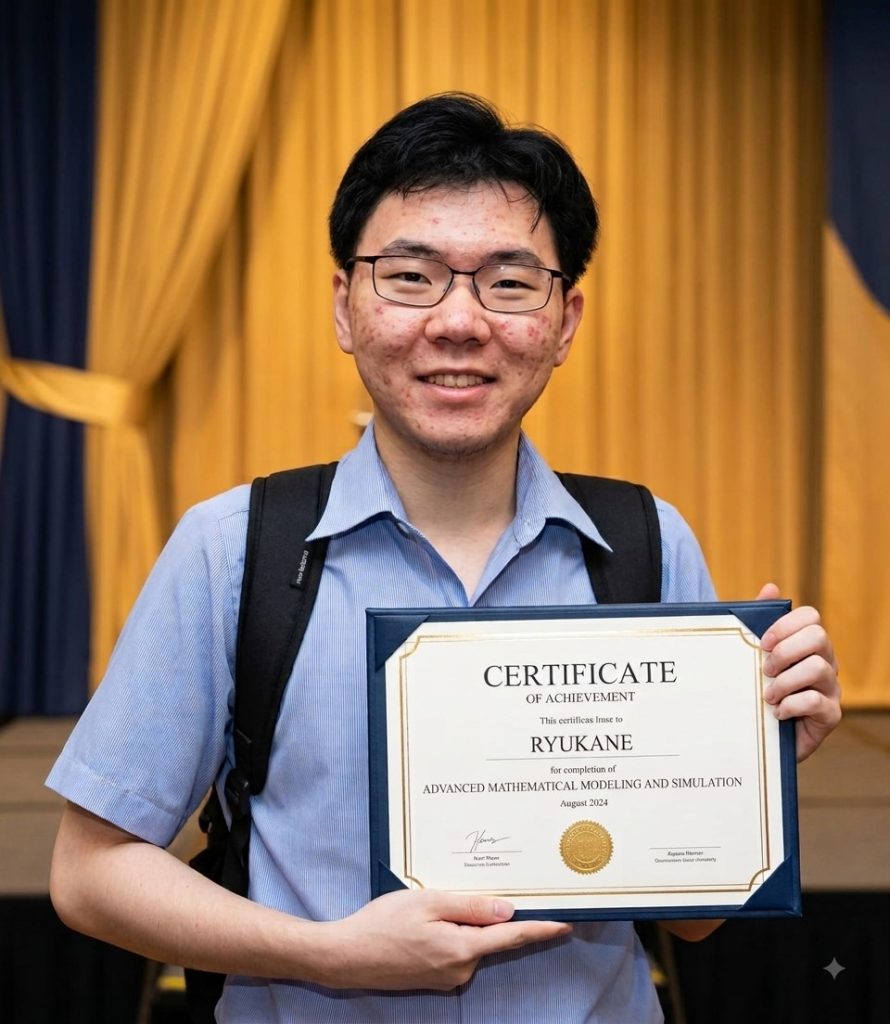
Ryukane, a Jakarta Academics student, is one example of how a flexible learning environment can support academic excellence. Despite completing his learning through an online and flexible model, Ryukane achieved an outstanding result in his 2026 IGCSE examinations, earning an A* in Mathematics and an A in Physics.

His achievement challenges the assumption that students need to be physically present in a conventional classroom every day to perform academically.

Meet Ryukane: A Strong 2026 IGCSE Result

In his 2026 IGCSE results, Ryukane achieved:

  • A* in Mathematics
  • A in Physics

These are strong results, particularly in subjects that require consistent practice, conceptual understanding, problem-solving, and independent study. His results demonstrate that where a student learns does not automatically determine how well they can perform academically.

What matters is whether the learning environment provides the right support, structure, resources, and opportunities for the student to develop.


Can Online Learning Really Prepare Students for IGCSE?

One of the biggest questions parents may have about online or homeschooling education is whether students can achieve the same academic standards as students in conventional schools.

Ryukane’s experience provides a real example.

Although his learning took place through an online learning model, he was still able to work toward an internationally recognized qualification and achieve excellent results.

For students taking IGCSE, success requires more than simply attending classes.

Students need to develop:

  • Strong subject knowledge
  • Independent learning skills
  • Time management
  • Consistent study habits
  • Problem-solving skills
  • Exam preparation strategies
  • The ability to take responsibility for their own learning

An online or hybrid learning environment can support these skills when it is designed around the individual student.

Breaking the Misconception: Homeschooling Students Are Academically Behind
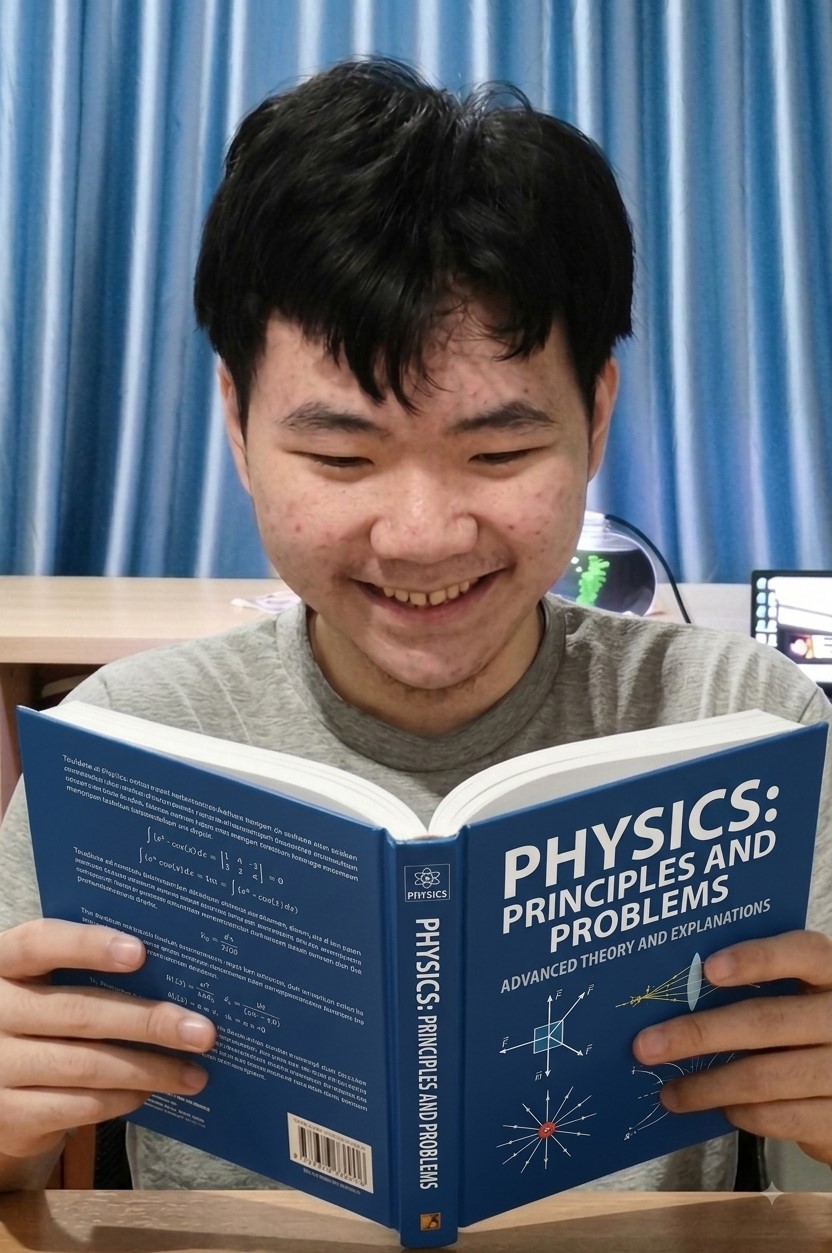
There is a common stigma that homeschooling students may be academically behind their peers. However, this assumption does not reflect every student’s experience.

Students learn differently.

Some students perform better when they have a highly structured classroom environment. Others may perform better when they have greater flexibility, fewer distractions, and more control over their learning pace.

Ryukane’s results are one example of how flexible and online learning can support high academic achievement.

An A* in Mathematics and an A in Physics show that learning outside a conventional school environment does not mean lowering academic expectations. In fact, for some students, the flexibility of online or hybrid learning can allow them to focus more effectively on their academic goals.

What Makes Flexible Learning Different?

At Jakarta Academics, we believe education should not be about forcing every student into the same environment. A student’s learning needs can be different. Some students may prefer learning primarily online. Others may want regular face-to-face interaction.

Some may want a combination of online learning and onsite activities. This is where hybrid learning can provide an alternative. Students can have the flexibility of online learning while still having opportunities to participate in offline activities, connect with peers, and engage with their school community.

The goal is not to choose between online and offline learning simply because one is considered “better.” The goal is to find the environment that helps each student perform at their best.

Academic Excellence Does Not Depend on a Traditional Classroom Alone

Ryukane’s achievement also highlights an important point about modern education.

A physical classroom is one way of learning, but it is not the only way.

With access to qualified teachers, appropriate learning resources, structured academic support, and a curriculum such as Pearson Edexcel IGCSE, students can pursue rigorous academic qualifications through flexible learning models.

What matters is the quality of the educational experience and how well it supports the individual student.

This is particularly relevant for students who may not thrive in a conventional school environment.

A flexible model can allow students to create a learning routine that better fits their individual needs while maintaining academic expectations.

IGCSE Results Are About More Than Grades

While Ryukane’s A* in Mathematics and A in Physics are certainly worth celebrating, the achievement represents more than two grades.

It demonstrates the potential of students who take ownership of their education.

Independent learning requires students to become more responsible for their progress.

They need to understand what they are learning, identify areas where they need improvement, and develop strategies to overcome academic challenges.

These are valuable skills not only for IGCSE but also for future university study.

From IGCSE to Future Academic Pathways

Strong IGCSE results can also provide students with a foundation for their next educational stage.

Students may continue into programmes such as A Level, Foundation, or other university preparation pathways, depending on their academic goals and preferred university destination.

For students interested in studying abroad, having strong academic foundations can be particularly important.

Ryukane’s achievement demonstrates that students do not necessarily have to follow a conventional school pathway to prepare for their future.

There can be different routes to the same goal.

A Different Learning Environment, the Same High Expectations

At Jakarta Academics, flexibility does not mean lowering academic standards. It means giving students more flexibility in how, when, and where they learn, while maintaining a clear focus on their academic development.

Ryukane’s 2026 IGCSE results are a great example of this philosophy in practice. He learned through an online and flexible environment, yet achieved results that demonstrate strong academic performance:

A* Mathematics.
A Physics.

These results challenge the idea that students who learn outside conventional schools cannot excel academically.

Breaking the Stigma Around Homeschooling and Online Learning

There is no single definition of what a successful student looks like. Some students thrive in conventional classrooms. Others may thrive through online learning. Some need a hybrid approach that combines the flexibility of online education with opportunities for face-to-face interaction.

What matters is finding the environment that allows the student to learn effectively, stay motivated, and reach their potential. Ryukane’s IGCSE achievement is one example of what is possible. His results remind us that academic excellence is not limited to one type of school or one way of learning.

And perhaps most importantly, his story helps challenge the misconception that homeschooling or online learning automatically means lower academic performance.

Sometimes, giving students the freedom and flexibility to learn in a way that works for them can help them achieve more than we expect.

Congratulations, Ryukane! 🎓

Everyone at Jakarta Academics is proud to celebrate Ryukane’s outstanding 2026 IGCSE results.

A* in Mathematics. A in Physics.

His achievement is not only a result to celebrate, but also an example of how flexible, online, and hybrid education can support students in achieving academic excellence.
Recent Post

Get to Know Pre-Primary at Jakarta Academics

Choosing the right early education programme is an important decision for parents. At the pre-primary stage, children are beginning to develop essential skills, habits, confidence, and curiosity that can support them throughout their education journey.

But does early education have to look the same for every child?

At Jakarta Academics, our Pre-Primary programme is designed around a simple idea: young children learn best when their learning environment can adapt to their needs.

Through a flexible and personalized approach, Pre-Primary at Jakarta Academics gives children opportunities to learn, explore, socialize, and develop at their own pace.

What Is Pre-Primary?

Pre-Primary education is an early stage of learning designed to prepare young children for their future educational journey.

At this stage, education is not only about teaching children academic concepts. It is also about helping them develop:

  • Communication skills
  • Social and emotional skills
  • Independence
  • Problem-solving abilities
  • Creativity
  • Confidence
  • Early literacy and numeracy
  • Curiosity and a love of learning

For young learners, these foundational skills can be just as important as learning how to read, write, or count. That is why Pre-Primary at Jakarta Academics focuses on creating meaningful learning experiences rather than simply following a fixed academic routine.

A More Personalized Approach to Early Learning

Every child develops differently. Some children are naturally curious and enjoy exploring independently. Others learn better through interaction, conversation, movement, or hands on activities. Because of these differences, a one-size-fits-all approach may not always be the best fit for every child.

At Jakarta Academics, our learning approach aims to provide a more personalized educational experience.

Rather than expecting every child to learn in exactly the same way and at exactly the same pace, teachers can pay closer attention to each student’s development, interests, strengths, and areas where they may need additional support. This allows learning to become more meaningful for the child.

What Do Children Learn in Pre-Primary?

Pre-Primary is about building a strong foundation across different areas of development.

1. Early Literacy

Children begin developing the skills they need to become confident readers and communicators.

Activities may introduce children to:

  • Letters and sounds
  • Vocabulary
  • Storytelling
  • Listening
  • Speaking
  • Early writing skills

The goal is not simply to make children memorize letters or words. It is to help them understand that language is a tool they can use to communicate and express themselves.

2. Early Numeracy

Children are also introduced to basic mathematical concepts through age-appropriate activities.

They may explore:

  • Numbers
  • Counting
  • Shapes
  • Patterns
  • Sorting
  • Basic measurements
  • Simple problem-solving

At this age, learning mathematics can be much more engaging when children can connect concepts with things they see and experience in everyday life.

3. Social and Emotional Development

Learning how to interact with others is an essential part of early childhood education.

Pre-Primary students can begin learning how to:

  • Share
  • Communicate their feelings
  • Listen to others
  • Cooperate
  • Take turns
  • Solve simple conflicts
  • Build friendships

These experiences help children develop the confidence and emotional awareness they need as they grow.

4. Creativity and Exploration

Young children are naturally curious.

Pre-Primary education should give them opportunities to ask questions, experiment, create, and discover.

Creative activities such as art, storytelling, music, movement, and hands-on projects can help children express themselves while developing their imagination.

Learning Through Experience

For young children, learning does not only happen when they are sitting at a desk. A child can learn about numbers while counting objects. They can learn communication through storytelling. They can learn teamwork through group activities.

They can learn problem-solving by figuring out how to complete a project. This is why experiential learning can be an important part of the Pre-Primary experience. Instead of separating learning into isolated academic subjects all the time, children can experience learning as something connected to the world around them.

A Learning Environment Designed Around the Child

One of the key principles of Jakarta Academics is personalized learning. Rather than focusing solely on a standardized pace, teachers can consider where each student is in their learning journey.

This is particularly important during the early years because children can develop at very different rates. One child may be confident with numbers but still developing communication skills.

Another may love storytelling but need more time to develop early numeracy. A personalized approach allows educators to recognize these differences and provide appropriate support.

Does Pre-Primary Mean Children Learn Alone?

Not at all.

Another important part of early education is developing relationships and learning how to interact with others. While Jakarta Academics provides a flexible learning model, children can still have opportunities to participate in activities that encourage social interaction, collaboration, and community building.

This can include learning activities, projects, events, and other experiences where students can interact with their peers and teachers. The goal is to provide flexibility without removing the social aspect of education.

Why Choose a Flexible Pre-Primary Programme?

Parents today have different circumstances and priorities. Some families may prefer a more traditional school environment. Others may be looking for an educational approach that provides greater flexibility.

A flexible learning model can be particularly useful for families who value:

Personalized learning
Children can receive learning experiences that consider their individual development.

Flexible schedules
Families may have different schedules and routines, and flexibility can make education easier to integrate into daily life.

A supportive learning environment
Young children can benefit from an environment where they feel comfortable asking questions, exploring, and making mistakes.

A balance between independence and support
Children can gradually develop independence while still receiving guidance from teachers and parents.

Preparing Children for Their Next Educational Stage

Pre-Primary is not simply about what children learn today. It is also about preparing them for what comes next. As children progress through their education, they will increasingly need to:

  • Learn independently
  • Communicate effectively
  • Work with others
  • Solve problems
  • Adapt to new situations
  • Take responsibility for their learning

Developing these skills early can help children approach future learning with greater confidence.

At Jakarta Academics, we believe that early education should build more than academic knowledge. It should help children develop the confidence, curiosity, and independence they need for their next stage.

Is Jakarta Academics Pre-Primary Right for Your Child?

There is no single educational model that is perfect for every family. The right choice depends on your child’s learning needs, personality, development, and your family’s circumstances.

If you are looking for a Pre-Primary programme in Jakarta that combines personalized learning with a flexible educational approach, Jakarta Academics may be worth exploring.

The best way to understand whether the programme is right for your child is to learn more about the learning environment, meet the educators, and understand how the programme can support your child’s individual development.

Start Your Child’s Learning Journey at Jakarta Academics

The early years of education can shape how children see learning for years to come. At Jakarta Academics, we want children to see learning not as something they simply have to do, but as something they can enjoy, explore, and take ownership of.

Through personalized learning, flexibility, and meaningful experiences, our Pre-Primary programme aims to give young learners a strong foundation for their next educational journey.

Interested in learning more about Pre-Primary at Jakarta Academics? Contact our team to discover the programme and find out how it can fit your child’s needs.

Homeschooling Without Isolation: How Hybrid Learning Brings Students Together

When people hear the word homeschooling, one of the first assumptions is often that students learn entirely from home, study alone, and rarely participate in social or offline activities.

But is that really the case?

At Jakarta Academics (JA) Jakarta and Bali, we believe homeschooling and hybrid learning should not mean limiting students to one way of learning. Some students thrive in a fully online environment, while others enjoy meeting their peers, participating in activities, and building friendships through offline events.

That is why our approach gives students something important: choice and flexibility.

Our recent Indonesia Independence Day celebration on August 17 was a great example of how hybrid learning can bring students, parents, and teachers together beyond the classroom.

Can Homeschooling Students Attend Offline Events?

Yes.

One of the biggest misconceptions about homeschooling is that students must always study from home and cannot participate in traditional school activities.

The reality is that homeschooling can take many different forms.

At Jakarta Academics, students have different learning needs, personalities, schedules, and preferences. Some students prefer the flexibility of studying online and may not want to attend every offline activity. Others are excited to meet their classmates, participate in school events, and experience learning outside the home.

And that’s completely okay.

Not every student needs the same learning environment.

Some students may prefer:

  • Fully online learning
  • Offline activities
  • A combination of online and offline learning
  • Flexible participation based on their needs and interests

This is where the hybrid learning model becomes particularly valuable.

Instead of asking students to fit into one fixed system, hybrid learning allows the learning experience to adapt to the student.

Celebrating Indonesian Independence Day at Jakarta Academics

On August 17, Jakarta Academics Jakarta celebrated Indonesia’s Independence Day with approximately 100 students, parents, and teachers participating in the event.

The celebration started with a flag ceremony, followed by one of the most iconic parts of Indonesian Independence Day celebrations: the traditional 17 August competitions, or “lomba.”

The atmosphere quickly became lively and competitive.

Students and parents participated in various activities, including:

  • Kerupuk eating challenge
  • Marble race (lomba kelereng)
  • Wooden sandal race (lomba bakiak)
  • Archery competition
  • And several other fun activities

Although the competitions were designed primarily for fun, everyone quickly became invested in the games. There was cheering, there was competition, there was laughter, and, of course, there were some disappointments when someone lost. But that’s part of the experience.

More Than Just a School Event

For us, the Independence Day celebration wasn’t simply about organizing an offline event. It represented something much bigger.

Community.

Homeschooling students can have flexibility without having to sacrifice opportunities to connect with others. The flag ceremony, for example, provided an opportunity for students to participate in a meaningful Indonesian tradition.

For Indonesian students, understanding their roots and culture is an important part of growing up. Participating in an Independence Day ceremony allows students to experience that sense of national identity together with their peers, teachers, and families. It is not just about standing in front of a flag. It is about understanding where we come from and what brings us together.

What Can Students Learn From a Simple “Lomba”?

At first glance, traditional Independence Day competitions might seem like nothing more than games. But there are actually many lessons hidden within them.

Learning to Compete

Students experience healthy competition and learn how to work toward a goal.

Learning to Lose

Not everyone wins. Some students were disappointed. Some even cried after losing a competition. And that’s okay. One of the lessons we hope students take away from these experiences is simple:

You can lose, and that’s okay.

Winning isn’t always the most important outcome.

Learning how to handle disappointment, accept the result, and try again is also an important part of growing up.

Learning to Connect

Perhaps one of the most meaningful outcomes of the event was seeing students who had previously only interacted online finally meet one another in person.

Some students made new friends.

Others discovered shared interests.

Parents connected with other parents.

Teachers interacted with students outside the usual learning environment.

Slowly, a group of individual students began to feel more like a community.

Building Friendships Beyond the Classroom

One of the concerns people sometimes have about homeschooling is whether students have enough opportunities to socialize.

This concern comes from a common perception that homeschooling means students spend most of their time studying independently at home.

But socialization doesn’t have to happen in exactly the same way as it does in a traditional school.

Students can build friendships through:

  • School events
  • Group projects
  • Extracurricular activities
  • Online communities
  • Offline gatherings
  • Sports and competitions
  • Workshops and field activities

At Jakarta Academics, we believe that social interaction should be available, without being forced into a one-size-fits-all system. The Independence Day event showed us exactly why this matters. Students who wanted to participate could join. Students who preferred not to attend an offline event could continue with their preferred learning environment. That flexibility is one of the strengths of hybrid learning.

Homeschooling Does Not Have to Mean Learning Alone

Perhaps the biggest misconception we want to address is this:

Homeschooling means studying alone.

It doesn’t have to. Modern homeschooling and hybrid education can provide students with a combination of personalized learning, flexibility, digital education, and real-world experiences.

At Jakarta Academics, students can have the freedom to learn in a way that works for them while still having opportunities to become part of a community. For some students, that may mean spending most of their learning time online. For others, it may mean regularly joining onsite activities. And for some, it may mean a combination of both. There is no single correct way to learn.

The Freedom to Choose Is the Strength of Hybrid Learning

This is ultimately what we believe makes hybrid learning different from traditional education.

Instead of asking:

“Should students learn online or offline?”

We ask:

“What does this student need?”

If a student prefers a fully online learning experience, that option should be available. If another student wants to participate in onsite activities, they should have that opportunity too. And if a student wants both, hybrid learning makes that possible. The goal isn’t to remove the school experience. It is to redefine what the school experience can look like.

Breaking the Stigma Around Homeschooling

The Independence Day celebration at Jakarta Academics was a small example of something we see every day: homeschooling does not have to mean isolation. Our students can learn independently, build friendships, participate in community activities, and experience important moments together.

At the same time, we recognize that every student is different. Not every student wants to attend an onsite event, and they shouldn’t have to. That’s the freedom we want to provide.

Online when they need flexibility.
Offline when they want connection.
Hybrid when they want both.

Because education shouldn’t be about forcing every student into the same experience. It should be about creating an environment where every student has the freedom to learn, connect, and grow in the way that works best for them. And sometimes, that means putting down the laptop, joining a lomba with your friends, getting a little too competitive over a marble race, and celebrating Indonesia together.

Happy Independence Day from Jakarta Academics Jakarta and Bali. 🇮🇩

Jakarta Academics: Indonesia’s Trusted International Homeschooling Program

For more than 10 years, Jakarta Academics has helped Indonesian students build strong academic foundations through a genuinely international homeschooling program. When the school first launched, homeschooling in Indonesia was widely misunderstood, many parents assumed it was only for students who were struggling, “problem” kids, or children who couldn’t keep up socially. A decade of results later, that assumption has proven wrong.

This article breaks down exactly what makes Jakarta Academics’ homeschooling program international, credible, and effective from curriculum and qualifications to teaching quality, personalization, and safety.

Is the Curriculum Really International?

Jakarta Academics teaches the Pearson Edexcel curriculum, one of the UK’s most respected international qualifications, widely recognized across Europe, Africa, and the Middle East.

Jakarta Academics is proud to be an official Pearson Edexcel study center, meaning we don’t just teach from Edexcel textbooks or follow the syllabus loosely. As an accredited center, we are authorized to host official Edexcel examinations, and a number of other schools send their own students to sit exams at our center.

Key question parents ask: “Is the ‘international’ label real, or just marketing?”

This is the right question to ask of any school claiming to be international. The answer lies in accreditation. Because Jakarta Academics is a verified, official study center of an internationally recognized awarding body, our qualifications carry real, portable academic weight, not just a label. Prospective parents are encouraged to look into our accreditation status and speak with our alumni to see the results for themselves.

University Pathways: Where Do Our Students Go?

One of the most common misconceptions in Indonesia is that homeschooled students will struggle to get into university, especially competitive ones. In reality, Jakarta Academics alumni have been accepted into universities across the UK, the Netherlands, France, Singapore, Malaysia, and top universities within Indonesia itself.

This is possible because the program is not built around short-term results. Every subject, assessment, and qualification pathway is designed with each student’s long-term university and career goals in mind, not just passing the current term.

Our Teachers

All teachers at Jakarta Academics are trained and experienced in delivering the international curriculum, a requirement mandated directly by the UK awarding body. But qualifications are only part of the picture. Just as important is a teacher’s ability to genuinely understand each student,  their learning pace, their gaps, and what kind of support actually helps them grow. Academic credentials come first, but a humanistic, student-centered teaching approach is non negotiable.

Is Learning Really Personalized?

Parents considering homeschooling are often doing so because their child hasn’t thrived in a conventional classroom. Here’s how Jakarta Academics addresses the most common concerns:

  • Can learning pace be adjusted? Yes. Pace is tailored to each student rather than a fixed classroom schedule.
  • Can students choose their subjects? Yes, subject selection is guided by the student’s future goals and interests.
  • Can a student move faster in subjects they’re strong in? Yes — because the focus is on subjects the student is genuinely engaged with, progress isn’t capped by a group average.
  • What if a student falls behind? Small class sizes mean teachers can closely track each student’s progress and step in early with focused attention or additional sessions when needed.
  • Is the schedule flexible? Yes. Students can study online, onsite, or in a hybrid format, and schedules can be adapted for situations like student-athletes with demanding training routines.
  • How does the school understand each child’s learning style? Every new student completes an entry assessment and interview before enrollment, giving teachers an initial picture of their learning style. From there, teachers continuously monitor progress and adjust support as needed.

What Does a Typical Day Look Like?

Parents naturally want a concrete picture of what daily learning actually involves:

  • Format: Online, offline, or hybrid, depending on the student’s chosen path.
  • Class structure: Live classes with structured timetables (not solely pre-recorded content).
  • Workload: Regular assignments and assessments aligned with the Edexcel syllabus.
  • Assessment: Ongoing evaluation throughout the term, building toward formal examinations.

Examination and Qualification Pathway

An international curriculum on its own isn’t enough, parents want to know what their child actually walks away with. At Jakarta Academics, the pathway is clear:

Curriculum → Ongoing Assessment → Official Examination → Recognized Qualification → University Admission

Because Jakarta Academics is an official Pearson Edexcel study center, students sit for genuine, internationally recognized examinations on-site, the same qualifications accepted by universities worldwide.

Real Stories from Parents and Students

Trust is built through proof, not slogans. Rather than generic five-star reviews, Jakarta Academics shares real transformation stories, students who struggled in traditional schools before finding a better fit through personalized, international homeschooling, and went on to graduate with recognized qualifications and university offers.

Bisa gak ka tampilin video dari ig:

https://www.instagram.com/p/DaXXrp2v2XT/

https://www.instagram.com/p/DUNg7Gwk9Lw/

Frequently Asked Questions

Is homeschooling legal in Indonesia? Yes. Homeschooling (pendidikan informal/kelompok belajar) is a recognized educational pathway under Indonesian law, though families should confirm equivalency and reporting requirements based on their chosen curriculum.

Is Jakarta Academics accredited? Yes. Jakarta Academics is an official Pearson Edexcel study center, authorized to teach the curriculum and administer official examinations.

Can homeschool students get into good universities? Yes. Jakarta Academics alumni have been admitted to universities in the UK, Netherlands, France, Singapore, Malaysia, and Indonesia.

Is the program only for struggling students? No. This is one of the most common misconceptions about homeschooling in Indonesia. Jakarta Academics serves students with a wide range of goals, including those who simply need a more flexible or personalized path, such as student-athletes or students pursuing accelerated study in specific subjects.

Interested in learning more about enrollment, tuition, or scheduling a visit to our official Edexcel study center? [Contact Us Now].