Homeschooling vs Online School vs Hybrid School in Indonesia: What’s the Difference?

Homeschooling (sekolah di rumah) organises learning mainly outside a conventional school, often with parents or tutors in charge. Online school delivers a school-managed programme through live or recorded digital lessons. Hybrid school combines online lessons with face-to-face classes on campus. The right choice depends on how much structure, flexibility, and in-person interaction your child needs.

Choosing the right education for your child can feel overwhelming. Parents in Indonesia are no longer limited to traditional schools: homeschooling, online school, and hybrid school have all become real alternatives.

In this guide, we explain how each model works, compare their advantages and challenges, share what to ask before enrolling, and help you decide which pathway fits your child.

Why Are Parents Exploring Different Schooling Options?

Traditional schools remain an excellent choice for many students. A structured timetable, regular classroom interaction, and established programmes provide a strong foundation for learning.

However, some families need something different. A student who competes in sports may need more time for training. A family that travels often may prefer learning that does not depend on daily campus attendance. Other students benefit from smaller classes, extra academic support, or a schedule that suits them better.

The important question is not which model is universally better. It is which learning environment gives your child the right mix of academic quality, structure, flexibility, and support.

What Is Homeschooling (Sekolah Rumah)?

Homeschooling is an education model in which a child’s learning is organised primarily outside a conventional school setting, often under the responsibility of parents or guardians. Families may use independent study, private tutors, online resources, or a homeschooling provider. It can follow a national or international curriculum, depending on the programme and the family’s goals.

How Does Homeschooling Work?

There is no single format. Some families organise everything themselves, while others work with providers that offer structured lessons, assessments, and academic guidance. A typical arrangement may include:

  • A learning plan based on the student’s goals.
  • Lessons with parents, tutors, or teachers.
  • Independent study and assignments.
  • Regular assessments to monitor progress.
  • Extracurricular activities and social opportunities.

Before choosing, clarify who is responsible for curriculum planning, assessment, academic monitoring, and examination arrangements. If you want flexibility but also consistent guidance, a structured homeschooling programme in Jakarta and Bali may be worth considering.

Benefits of Homeschooling

  1. Greater flexibility: families may have more control over when and where learning happens.
  2. A learning approach suited to the student: activities can match the student’s interests, pace, and needs.
  3. More room for other interests: sports, arts, music, or entrepreneurship can fit alongside studies.
  4. Greater family involvement: parents can take an active role in their child’s progress.

Challenges of Homeschooling

Parents may need to invest significant time in organising lessons, monitoring progress, and finding resources. Students also need deliberate opportunities to build friendships and take part in group activities.

What Is an Online School?

An online school delivers education primarily through digital platforms. Students attend live virtual classes, complete assignments online, access learning resources, and communicate with teachers remotely. Compared with independent homeschooling, an online school generally offers a more structured, school-managed programme, although the level of structure varies by provider.

How Does Online School Work?

A typical programme may include scheduled live lessons, digital materials and assignments, online discussions, regular assessments and progress reports, and academic guidance from teachers.

Before enrolling, find out whether lessons are live, recorded, or a mix of both. Also ask about the curriculum, assessment system, teacher qualifications, and arrangements for formal examinations.

Benefits of Online Schooling

  1. Location flexibility: students can learn from home or another suitable place, subject to school requirements.
  2. Structured academic support: timetables, teaching plans, assignments, and assessments help students stay on track.
  3. Access to different programmes: families can reach programmes that may not be available locally.
  4. Less daily commuting: especially valuable in congested cities such as Jakarta.

Challenges of Online Schooling

Online learning needs reliable internet, suitable devices, and a space where students can concentrate. Some students need extra support with motivation, screen time, and engagement. Ask how the school encourages collaboration and peer relationships beyond the screen.
What Is a Hybrid School?

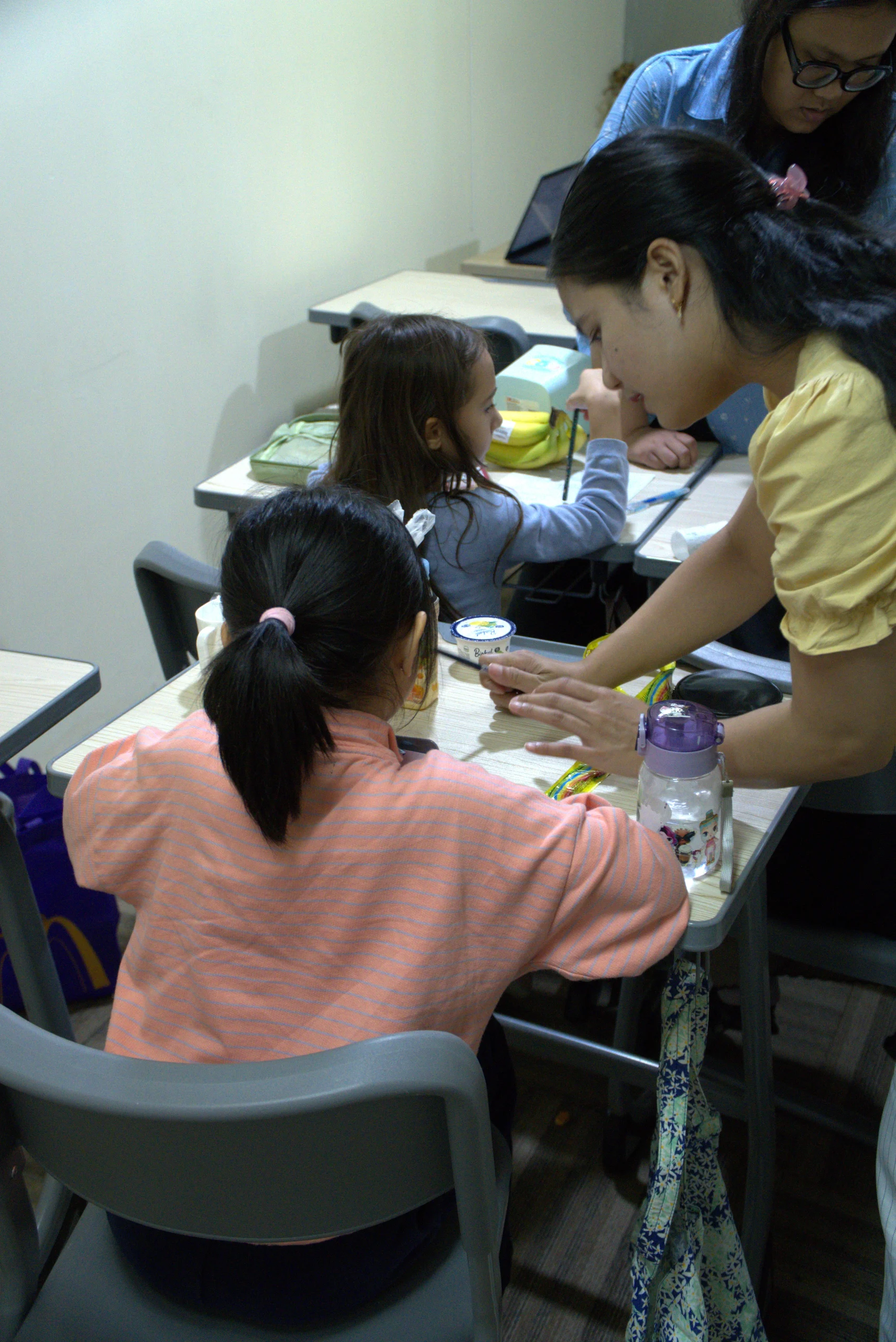
A hybrid school combines online and face-to-face learning within one structured programme. Students may attend campus on selected days and complete other lessons online, or combine online academic lessons with onsite activities, mentoring, and group learning. The aim is to pair the convenience of remote learning with the benefits of in-person interaction.

Hybrid models vary, so check how much teaching takes place online, how often students attend campus, and whether attendance is fixed or flexible. If you are exploring this option in Jakarta or Bali, you can see how hybrid and small-group learning formats are structured at one provider.

How Does Hybrid School Work?

A hybrid school may offer live online lessons, face-to-face classes, small-group sessions, online assignments and independent study, and onsite activities with peers. For example, a student might attend onsite lessons for selected subjects while joining other classes online. Another programme may use a regular campus schedule with online learning built into the timetable.

Benefits of Hybrid Schooling

  1. A balance of flexibility and structure: online convenience plus direct, in-person teaching.
  2. Face-to-face interaction: onsite classes help students build relationships and practise communication.
  3. Multiple learning environments: digital learning and classroom experience in one programme.
  4. Potentially more adaptable routines: useful for students balancing study with other commitments.

Challenges of Hybrid Schooling

Students must manage online assignments alongside onsite lessons, and families need to understand the timetable, attendance expectations, and communication procedures. Make sure online and in-person lessons are coordinated rather than feeling like two disconnected experiences.

Homeschooling vs Online School vs Hybrid School: Key Differences

Comparison Homeschooling Online School Hybrid School
Main learning environment Home or another chosen setting Primarily online Online and onsite
Academic structure Depends on the family or provider Usually provided by the school Usually provided by the school
Teacher interaction Depends on the arrangement Mainly virtual Virtual and face-to-face
Schedule flexibility Can be high Varies by programme Varies by programme
Social interaction Organised by the family or provider Virtual and offline activities Onsite classes and activities
Parent involvement May be substantial Depends on age and programme Depends on age and programme
Best for Families who want maximum control over pace and schedule Students who are self-motivated and need location flexibility Students who want flexibility but also regular in-person contact

The main distinction is how responsibility, teaching, and learning environments are organised. Homeschooling offers considerable flexibility but may require parents to take a more active role. Online school provides a structured programme without regular campus attendance. Hybrid school combines remote learning with face-to-face teaching.

None of these models guarantees better academic outcomes by itself. Teaching quality, curriculum, student support, and the suitability of the environment all matter.

What About Costs?

Costs vary considerably between providers. Factors include tuition, curriculum materials, tutoring, examination fees, learning devices, internet access, transportation, and extracurricular activities.

Homeschooling may involve costs for tutors, resources, and assessments. Online school fees may cover teaching and digital platforms, while hybrid fees may also reflect onsite facilities. It is not accurate to assume homeschooling is always cheaper or hybrid always more expensive.

When comparing programmes, ask for a full breakdown of tuition and additional fees, and compare the whole academic pathway rather than tuition alone. For families pursuing international qualifications, confirm whether examination fees and preparation classes are included.

Which Schooling Option Is Right for Your Child?

Use these five questions to evaluate your options.

1. How Much Structure Does Your Child Need?

Some students manage independent study well. Others need regular timetables, teacher supervision, and clear milestones. If your child needs consistent structure, look for defined learning goals, regular assessments, and accessible teacher support.

2. How Important Is Face-to-Face Interaction?

If regular in-person contact matters, a hybrid programme with meaningful onsite lessons may suit best. If your child is comfortable learning remotely, an online programme can work, provided it offers academic and social support.

3. Does Your Family Need a Flexible Schedule?

Travel, sports training, and artistic commitments are common reasons families look for flexibility. But flexibility should not mean an absence of academic expectations. Ask how the programme monitors progress.

4. What Curriculum and Qualifications Does the Programme Offer?

This matters most for future university applications. Ask whether the programme follows the Indonesian national curriculum, an international curriculum, or another framework. If your child plans to take International GCSEs or International A Levels, confirm the examination arrangements and the provider’s status. Do not assume all providers offer the same qualifications.

5. How Does the School Support Academic Progress?

Ask how teachers identify learning gaps, communicate with parents, assess performance, and help students who struggle. A good programme has a clear approach to monitoring rather than leaving students to manage everything alone.

Which Option Is Better for International Education?

For families seeking international education, the learning format is only one part of the decision. Curriculum, teaching quality, assessment arrangements, and available qualifications matter just as much. A student can pursue international education through different arrangements, so what matters is understanding exactly what the provider offers.

For example, families considering a British curriculum pathway should ask which subjects are available, how students prepare for examinations, and whether the provider has the appropriate status for the services it offers. You can read more about international homeschooling options before comparing providers.

Students planning to attend university should research entry requirements for their intended courses and destinations. Admission depends on the qualifications achieved and each institution’s requirements. No learning model guarantees admission.

How Jakarta Academics Supports Flexible International Learning

At Jakarta Academics (JA), we recognise that students do not all learn in the same way. Some prefer online lessons, others thrive in a physical classroom, and some families want a combination.

JA offers different learning formats in Jakarta and Bali, including online, onsite small-group learning, and hybrid learning. The available arrangement depends on the programme and the student’s needs. Our approach combines academic guidance, small-group learning, and international curriculum pathways, including Pearson Edexcel programmes.

[Add a short, real example here, such as a Jakarta family whose student combined sports training with a hybrid timetable. Use only details you can confirm.]

Explore the learning options available at Jakarta Academics:

Frequently Asked Questions

Is homeschooling the same as online school?

No. Homeschooling organises learning primarily outside a conventional school, often led by parents or guardians. Online school delivers education through a digital platform and generally provides a school-managed programme. Some homeschooling arrangements also use online lessons.

Is hybrid school better than online school?

Not necessarily. Hybrid combines online and onsite learning, while online school relies mainly on virtual instruction. Hybrid may suit students who benefit from face-to-face interaction, but the right choice depends on teaching quality, student needs, and programme design.

Can children socialise while homeschooling?

Yes. Homeschooled students can build friendships through extracurricular activities, sports, community groups, learning centres, and organised events. Plan for regular opportunities to interact with other children.

Is online school suitable for primary school students?

It can be, if the programme offers age-appropriate instruction, teacher support, and supervision. Younger children usually need more help with routines, concentration, and independent learning.

Can students from homeschooling or online school attend university?

Potentially, yes. Eligibility depends on the qualifications obtained, the institution’s requirements, the student’s academic record, and admissions rules. Verify these details before choosing a programme.

Is homeschooling (sekolah rumah) legal in Indonesia?

Indonesia recognises home-based education within its education framework, but the requirements and pathways depend on the arrangement. Parents should consult the relevant education authorities and confirm how assessment, equivalency (penyetaraan), and qualifications are handled before enrolling. For official information, see the Ministry of Primary and Secondary Education’s Sekolahrumah programme information.

How do I choose between homeschooling, online school, and hybrid school?

Start with your child’s academic needs, preferred learning environment, schedule, and long-term goals. Then compare programmes by teaching support, curriculum, assessment, costs, and qualifications.
Find the Learning Approach That Fits Your Child

Homeschooling, online school, and hybrid school each organise education differently. The right choice depends on the student, the family’s needs, and the quality of the programme. Look beyond the label and understand what each option actually offers.

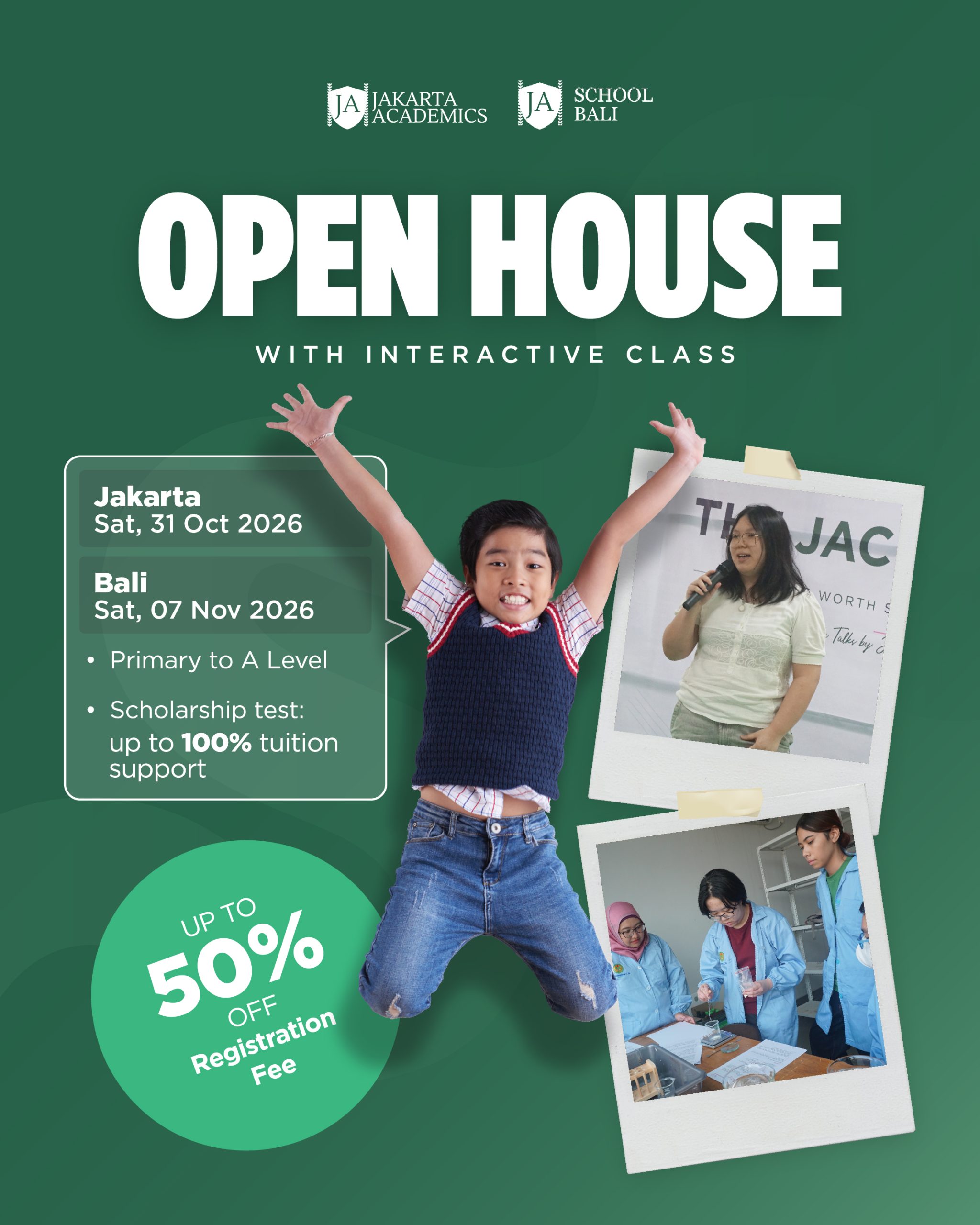
Ready to explore your child’s learning options? Contact Jakarta Academics to learn more about programmes in Jakarta and Bali and discuss which arrangement may suit your family.

Explore Jakarta Academics

Disclaimer: Programme availability, curriculum, qualifications, and examination arrangements may vary. Please confirm the current details directly with Jakarta Academics before enrolling.
 

Recent Post

What If School Focused More on What Your Child Actually Needs?

Choosing a school for your child in Bali is not always about finding the school with the biggest facilities or the longest schedule. For many parents, especially expat families living in Bali, there is another question that may matter more:

Is my child really getting what they need from school?

Of course, children need a strong academic foundation. They need to learn Maths, English, Science, and other core subjects that will support them throughout their education.

But at the same time, children also need to learn how to think, communicate, make decisions, work with others, and become more independent.

So, does school always need to mean more subjects, longer hours, and more homework?

Maybe not. For some children, a more focused and personalised approach can create a better learning experience.

It’s Not Always About More, but About Better Focus

A long school day with a wide range of subjects can certainly look comprehensive. But spending more time at school does not always mean children are learning more effectively.

Every child has a different ability to focus. When they spend the whole day moving from one lesson to another, completing assignments, and then coming home to more homework, there may be very little time left to rest or do the things they genuinely enjoy.

Children also need space to grow beyond textbooks and exams.

A more focused approach does not mean taking education less seriously. In fact, it means using learning time more intentionally – making sure children understand what matters, receive enough attention from their teachers, and have the opportunity to learn in a way that works for them.

Core Subjects Still Matter

Personalised education does not mean academics become less important.

Maths, English, Science, and other core subjects remain an important part of a child’s education. What can make a difference is how those subjects are taught.

In a smaller class, teachers have more opportunities to understand how each student learns. Children also have more space to ask questions, take part in discussions, and receive support when they find something challenging.

They are not simply expected to complete the material. They are encouraged to actually understand what they are learning.

For some children, this kind of environment can make learning feel calmer, more focused, and more purposeful.

Children Also Need to Learn Things That Aren’t in a Textbook

Academic results matter. But parents are not only preparing their children for exams. They are also preparing them for life.

How does your child communicate with others?

Can they work as part of a team?

Are they comfortable expressing their ideas?

How do they respond when things do not go as planned?

Can they manage their time and take responsibility for their own tasks?

These are not always skills that children develop through textbooks alone.

That is why Life Skills can be an important part of a child’s education.

At JA School Bali, Life Skills are part of the learning experience, helping students develop practical skills they can use not only at school, but also in everyday life.

Giving Children Space to Discover Their Interests

Every child is interested in different things.

Some enjoy sports. Others may be interested in art, technology, business, music, or creating things with their hands.

Not every interest needs to become a school subject.

Sometimes, children simply need the time and space to explore.

Through the Passion Project, students at JA School Bali have the opportunity to explore something they genuinely care about, develop their own ideas, and take greater responsibility for their learning.

Experiences like these can help children discover what they enjoy, what they are good at, and what they may want to explore further.

Small Classes Can Make a Difference

Class size is another factor worth considering when choosing a school.

In a large classroom, it can be difficult for a teacher to give the same level of attention to every student.

In a smaller class, teachers can get to know each child more closely. They can notice when a student is struggling, understand how they learn best, and provide more appropriate challenges when they are ready to move further.

At JA School Bali, small classes are part of the personalised learning approach.

The goal is not simply to have fewer students in a classroom, but to create an environment where every child is known, supported, and given more personal attention.

An International School Is About More Than the Curriculum

For expat families, choosing a school with an international curriculum is naturally an important consideration.

But the curriculum is only one part of the school experience.

The learning environment matters too.

How do teachers interact with students? Do children receive enough individual attention? Do they have space to explore their interests? Do they feel comfortable asking questions and expressing their ideas?

JA School Bali follows the Pearson Edexcel International Curriculum in an English-speaking learning environment.

However, the experience goes beyond academics. Students also have opportunities to develop Life Skills, Passion Project, and Sport Day as part of their overall school experience.

Children Still Need Time Outside the Classroom

For families living in Bali, a child’s life does not stop when the school day ends.

There are sports, hobbies, family time, and other activities that are also important to a child’s development.

That is why the school schedule is worth considering too.

A more focused school approach can give children room to enjoy life outside the classroom without compromising their academic foundation.

They can continue learning their core subjects while also having time to explore their interests, stay active, spend time with friends and family, and simply enjoy being a child.

Is This Approach Right for Every Child?

Of course, there is no single school model that works for every child.

Some children enjoy a large school with a wide range of activities and a busy schedule.

Others may thrive in a smaller, calmer environment where they receive more personal attention.

If your child tends to feel overwhelmed by a packed school schedule, needs more individual support from teachers, or has interests they would like more time to explore, a more focused approach to education may be worth considering.

In the end, the question is not always:

Which school offers the most?

Perhaps the better question is:

Which school is the right fit for what my child actually needs?

A Different Way to Learn in Bali

JA School Bali is an International Microschool in Bali with the Pearson Edexcel International Curriculum, combining academic learning with a more personalised approach.

Students learn core subjects in small classes, receive personalised learning, and have opportunities to develop through Life Skills, Passion Project, and Sport Day.

The approach is not about making children learn less.

It is about making their learning time more focused, personal, and meaningful.

For expat families looking for a school in Bali that offers a more focused and personalised approach while maintaining a strong academic foundation, JA School Bali may be worth considering.

Because education is not only about how much children learn.

It is also about how they learn, who they are becoming, and whether they have enough space to become themselves.

If you are looking for a school in Bali and want to explore whether a more personalised approach could be the right fit for your child, visiting JA School Bali can be a good place to start.

Schools Built by Educators: Putting Students at the Center

Education today can sometimes look increasingly like a business.

Advertisements are everywhere. Schools set annual targets, compete with one another, promote new facilities, and introduce programs that are presented as unique selling points. In some cases, the competition becomes less about the quality of education itself and more about which school has the most impressive features.

But in the middle of all this competition, are we losing sight of what a school is actually supposed to be?

A school exists to educate children.

It exists to help them learn, grow, discover their abilities, develop confidence, and understand who they are and what they can contribute to the world.

When Education Starts Looking Like a Product

A school may have an excellent curriculum, impressive facilities, and a large number of international or expatriate teachers. But the real question should be: Are these things actually what students need?

Having international teachers, for example, can certainly bring valuable perspectives and experiences into a classroom. But hiring someone simply because they are an expatriate or because they fit the image of an “international school” does not automatically mean students are receiving a better education.

The same applies to facilities and programs.

A school can have a long list of extracurricular activities, advanced technology, competitions, international programs, and impressive facilities. But if those things do not meaningfully contribute to a student’s learning or development, then their presence alone should not define educational quality.

Education should not be about collecting features.

It should be about understanding students.

Are Students Being Supported or Used to Build a School’s Reputation?

Consider academic and extracurricular achievements.

A school may proudly announce that its students have participated in numerous competitions and won multiple awards. Those achievements are certainly worth celebrating.

But there is another question worth asking:

Why did the school support those students in the first place?

Did educators genuinely recognize a student’s potential and provide the guidance, resources, mentorship, and encouragement needed to develop it?

Or were those achievements primarily valuable because they could strengthen the school’s reputation?

There is an important difference between supporting students because they have potential and supporting students because their achievements benefit the institution.

A student should not have to become a trophy for a school to deserve support.

Every student deserves to be seen as an individual.

Shouldn’t Schools Start With What Students Actually Need?

Schools inevitably compete. Parents compare schools. Institutions have targets and reputations to maintain.

But education should not become a competition in which every student is expected to fit the same definition of success.

Not every student will win an international competition.

Not every student will become an academic high achiever.

Not every student will excel in mathematics, science, languages, sports, or the arts.

And that is okay.

Students have different strengths, different learning styles, different interests, and different ways of developing.

The responsibility of a school should be to help students discover those strengths—not simply to reward the students who already fit the system.

Schools Built by Educators

This is where the idea of a school built by educators becomes important.

Imagine a school that was created not primarily from a business opportunity, but from the concerns of educators who have spent years observing what students actually need.

A teacher may see something that a standardized system overlooks.

A student who is struggling academically may not necessarily lack ability. Perhaps the teaching approach does not match the way they learn. Perhaps the classroom environment is too large. Perhaps they need more individual attention. Perhaps they are struggling with confidence. Or perhaps their strengths simply exist outside the traditional academic subjects being measured.

These questions matter.

Because when a student struggles, the first question should not always be:

“What’s wrong with the student?”

Sometimes we need to ask:

“Is the system giving this student the right environment to succeed?”

Can One Teacher Truly Teach 20 Different Students in the Same Way?

Consider a classroom with 20 students.

Twenty different personalities.

Twenty different levels of understanding.

Twenty different interests.

Twenty different ways of processing information.

Twenty different strengths and challenges.

Can one teacher realistically expect all 20 students to learn effectively through exactly the same approach?

Of course, teachers work hard to differentiate instruction. But class size and classroom structure still matter.

When a student loses focus, performs poorly, and eventually receives the label of being “weak” or “unmotivated,” it is worth looking beyond the student’s grades.

Was the learning environment appropriate?

Did the student receive enough attention?

Was the material delivered in a way that made sense to them?

Did they have opportunities to ask questions, explore ideas, and learn through their own strengths?

Sometimes the problem is not simply the learner.

Sometimes we need to examine the learning environment itself.

Education Is More Than 1 + 1 = 2

Traditional education often places a strong emphasis on measurable academic outcomes.

And academic knowledge absolutely matters.

Students need literacy, numeracy, scientific understanding, critical thinking, communication skills, and many other forms of knowledge.

But education cannot stop there.

As students grow, they also begin asking much bigger questions:

What am I good at?

What do I actually enjoy?

What kind of person do I want to become?

What is my purpose?

What problems do I care about?

What kind of future do I want to build?

Real life is more complicated than 1 + 1 = 2.

A good education should prepare students not only to answer questions on a test, but also to navigate questions that do not have a single correct answer.

Discipline Should Have a Purpose

This also raises questions about how schools define discipline.

Uniforms should be neat.

Students should follow reasonable rules.

Schools need structure.

But when rules focus heavily on appearance, such as haircuts, hairstyles, or other forms of presentation we should also ask:

What educational purpose does this rule serve?

If a student’s haircut has no meaningful connection to their ability to learn, think, collaborate, or grow, why should it become a major measure of discipline?

Discipline should help students develop responsibility, respect, self-management, and consideration for others.

Rules should have a purpose.

Education should not be about controlling students simply because they are easier to manage when everyone looks and behaves exactly the same.

Student Centered Education Starts With Listening

Being student centered does not mean allowing students to do whatever they want.

It does not mean removing academic standards.

And it does not mean abandoning discipline.

Instead, student-centered education means understanding that the student is the reason the school exists in the first place.

It means asking:

  • What does this student need to learn?
  • How does this student learn best?
  • What are their strengths?
  • Where do they need support?
  • What motivates them?
  • What interests them?
  • What challenges are preventing them from progressing?
  • How can we help them develop their potential?

These questions shift the focus from “How do we make students fit our system?” to “How can we build an educational environment that helps students grow?”

Every Student Deserves the Opportunity to Be Supported

Perhaps the biggest principle is simple:

Every student deserves access to meaningful education and support.

Not only the students who win competitions.

Not only the students with high grades.

Not only the students who make the school look successful.

Every student.

A student’s potential may not always be visible through a report card.

Some students may be excellent problem-solvers.

Some may be natural leaders.

Some may be creative thinkers.

Some may be empathetic collaborators.

Some may discover their strengths later than others.

The role of educators is not necessarily to decide who is talented and who is not.

It is to create the conditions in which students have the opportunity to discover what they can become.

Bringing the Essence of School Back

Perhaps the future of education should not be about which school has the longest list of facilities, the most impressive marketing campaign, or the largest collection of achievements.

Perhaps we should return to a simpler question:

Is this school genuinely helping its students grow?

A school built by educators should begin with that question.

Curriculum matters.

Facilities matter.

Teachers matter.

Technology matters.

Achievements matter.

But none of these should become more important than the students themselves.

Because at the heart of education, there is no product to sell.

There is a person to develop.

And perhaps that is the essence of school we should never lose.


Raising Expat Children in Bali: What Should They Really Look for in a School?

Bali has become home to many families from different countries. Children growing up here can have a very different experience compared to those who have spent their childhood in the same city or country.

At school, they may meet friends from Indonesia, Australia, Russia, Europe, and many other countries. They may hear several languages throughout the day, experience different cultures, and become accustomed to the idea that everyone can have a different way of living.

At first glance, this sounds like an ideal experience.

But there is one thing parents sometimes overlook:

Does their child’s learning environment also help them grow and thrive in the middle of all this diversity?

Expat Children Need More Than an English-Speaking School

When looking for a school in Bali, many expat parents naturally consider an English-speaking environment. This is important, especially if their child plans to continue their education within an international education system.

However, an international school is not only about using English in the classroom. Children also need to feel comfortable asking questions, expressing their opinions, working with others, and being themselves.

When children grow up in a multicultural environment, these abilities become even more important. They may have friends from different cultural backgrounds, and their ways of thinking may be different. Even something that seems normal to one child may not necessarily be viewed the same way by another.

This is where a more personalised learning experience can make a difference.

What About Russian Expat Families in Bali?

Bali has a diverse international community, and Russian families are also part of that community. For Russian families living in Bali, for example, their children’s educational journey may involve more than one education system.

One child may have previously studied within the Russian education system before continuing their education internationally in Bali. Another may have grown up in an English-speaking environment from an early age.

Every child has a different experience. Because of this, schools cannot always use the same approach for every student.

What matters more is whether teachers understand where each child is in their learning journey and what they need to continue developing.

When Children Come from Different Educational Backgrounds

Imagine a classroom with several students who have different educational experiences.

Some may be very confident speaking English. Others may understand the material quickly but still feel hesitant to express their opinions. Some may have strong academic abilities but need more time to adjust to a new environment.

In a very large class, differences like these can be more difficult to notice. In small classes, however, teachers have a greater opportunity to get to know each student.

It is not only about knowing their grades, but also understanding how they learn, what they enjoy, and which areas may still require additional support.

An International Curriculum, But Still Personal

For expat families, an international curriculum is naturally one of the key considerations.

At JA School Bali, students follow the Pearson Edexcel International Curriculum in an English-speaking environment.

However, an international curriculum still needs to be delivered in a way that keeps children engaged in their learning.

Every child has a different pace, interests, and learning style.

Through personalised learning, teachers can provide attention that is better suited to each student’s individual needs.

The goal is not to make learning easier.

Instead, students continue to receive academic challenges while having the support they need to learn and grow effectively.

Children Also Need Space to Be Themselves

For children growing up in an international community, school can also be a place where they develop their identity and confidence.

They need opportunities to try new things. Perhaps they are interested in art, coding, sports, photography, music, or entrepreneurship. This is why the school experience should go beyond lessons and exams.

At JA School Bali, students also take part in Passion Project and Life Skills as part of their learning experience.

Through activities like these, students have opportunities to explore their interests, learn to make decisions, manage their time, work with others, and take responsibility for what they do.

A Multicultural School Should Also Help Children Adapt

One of the benefits of growing up in a multicultural environment is that children learn that the world is not limited to one way of thinking.

However, diversity can also come with its own challenges. Children need to learn how to communicate with people who may be different from them.

How do you express your opinion without putting someone else down?

How do you work in a group when everyone has different ideas?

How do you respond when someone does not have the same habits or customs as you?

These abilities may not always appear on a report card. However, they can become extremely valuable when children continue their education at university or enter an increasingly global workplace.

JA School Bali: International Learning with a More Personal Approach

JA School Bali combines the Pearson Edexcel International Curriculum, an English-speaking environment, small classes, and personalised learning.

With smaller class sizes, teachers have more opportunities to get to know students personally and provide more individual attention.

Beyond academics, students also gain experience through Passion Project, Life Skills, and Sport Day.

This approach is designed to help students develop more than just academic knowledge. It also supports their confidence, independence, communication skills, and ability to adapt.

For children growing up in an international environment, education is not simply about preparing them for one country.

They are preparing for a much bigger world.

Choosing a School for an Expat Child in Bali

Ultimately, there is no single school that is right for every child.

Every family has different needs, and so does every student.

For expat parents, perhaps the question is not only:

“Is this an international school?”

It could also be:

“Will my child be seen, supported, and given room to grow here?”

An international curriculum provides the foundation.

But the right learning environment can help children develop the confidence to make the most of it.

And for children growing up in Bali, surrounded by an increasingly multicultural world, the ability to learn, adapt, and remain true to themselves may be one of the most valuable things they can take with them.

If you are looking for an international school in Bali for your child and want to see how personalised learning works in a smaller learning environment, you are welcome to visit JA School Bali and experience the learning environment firsthand.