It’s one of the most common questions parents ask:
“Is IGCSE the same as SMP or SMA?”
And honestly, it makes sense to wonder. As parents, you want clarity. You want to know exactly where your child stands and what comes next.
But the truth is, IGCSE doesn’t fit specifically into either category.
Contents
So where does it actually belong?
Most students take IGCSE between the ages of 14 and 16. This places it around the final years of middle school (SMP) and the early stage of high school (SMA).
However, unlike the national system, IGCSE is part of an international curriculum that is commonly offered by exam boards such as Cambridge or Pearson Edexcel that focuses on both academic knowledge and skill development.
Students typically study 5-8 subjects, which may include:
- English
- Mathematics
- Sciences (Biology, Chemistry, Physics)
- Humanities (Economics, Business, Geography)
- Creative or elective subjects
At the end of the programme, students sit for internationally recognised examinations, and their results are graded per subject.
A Different Way of Learning
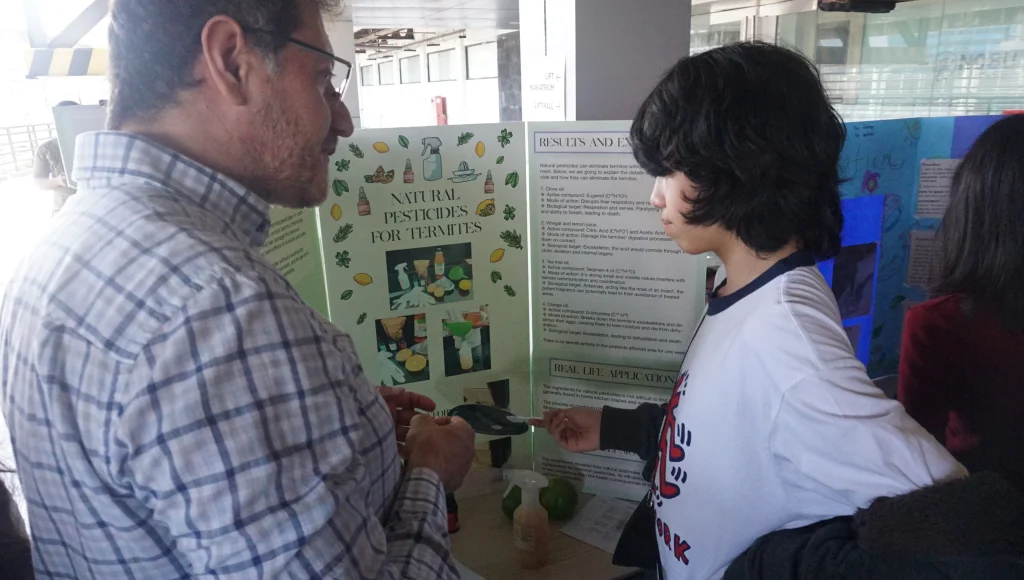
This stage is not just about covering content, it’s about how students engage with learning.
Instead of following a single fixed path, students begin to make more choices:
- Selecting subjects based on their strengths and interests
- Engaging in discussions, analysis, and problem-solving
- Applying knowledge, rather than memorising it
Assessment is also more varied. While final exams are important, students are often evaluated on:
- Written responses and structured essays
- Data analysis and case studies
- Practical or coursework components (in certain subjects)
This helps students build skills that are essential for further international study.
How Is It Different from SMP and SMA?
In the national system, the journey is quite straightforward.
Students move from SMP to SMA, following a set curriculum that is largely the same for everyone.
And for many families, that structure feels familiar and reassuring.
IGCSE, on the other hand:
- Offers more subject flexibility earlier on
- Emphasises critical thinking and independent learning
- Prepares students for international pathways such as A Levels, IB, or foundation programmes
So while it may sit around the same age as SMP or early SMA, its role is slightly different. It is designed as preparation for more specialised, globally recognised education systems.
Why Labels Don’t Always Help

It’s natural to want to classify IGCSE as either SMP or SMA, it feels clearer that way.
But IGCSE is better understood as a transition phase.
A bridge between foundational education and more advanced study, where students:
- Discover their academic strengths
- Begin to take ownership of their learning
- Prepare for more focused subject specialisation
So instead of asking “Which level is this?”, it may be more helpful to ask: “What is this preparing my child for?”
What This Means for Your Child
Every child learns differently.
Some students benefit from a structured, uniform system. Others thrive when given more flexibility and the opportunity to explore their interests earlier.
IGCSE provides:
- A recognised international qualification
- A strong academic foundation
- A smoother transition into programmes like A Levels
At Jakarta Academics, we guide students through this phase with both structure and support, which help them not only achieve strong academic results, but also gain clarity about their future direction.
In the End
IGCSE isn’t SMP. It isn’t SMA.
It sits in between, but importantly, it moves your child forward.
It’s a phase where students begin to understand how they learn, what they enjoy, and where they’re heading next.
If you’re considering IGCSE for your child and want to explore whether it’s the right fit, our admissions team at Jakarta Academics is here to guide you every step of the way.