Memilih Homeschooling Terbaik dengan Akreditasi A di Jakarta

Jakarta Academics

Saat ini, homeschooling semakin populer sebagai pilihan pendidikan yang fleksibel dan berkualitas. Namun, tidak semua homeschooling memiliki standar yang sama, terutama dalam hal akreditasi. Bagi orang tua yang mencari homeschooling akreditasi terbaik, Jakarta Academics hadir sebagai pilihan unggul yang menawarkan berbagai kelebihan baik untuk kebutuhan Homeschooling Jakarta ataupun di tempat lainnya seperti Homeschooling Bali. Homeschooling Jakarta Academics ini memberikan jaminan kualitas pendidikan yang dapat memenuhi kebutuhan siswa dengan cara yang lebih personal dan efektif.

Mengapa Pilih Homeschooling Akreditasi A Jakarta Academics?

Akreditasi A merupakan bukti bahwa sebuah lembaga pendidikan telah memenuhi standar kualitas yang ditetapkan oleh pemerintah atau lembaga terkait. Dengan memilih homeschooling yang terakreditasi A, orang tua dapat memastikan bahwa pendidikan yang diberikan memenuhi kriteria mutu yang tinggi, baik dalam hal kurikulum, pengajaran, maupun fasilitas.

Jakarta Academics adalah homeschooling Jakarta dan Bali yang telah terakreditasi A dan menawarkan berbagai kelebihan yang membuatnya lebih unggul dibandingkan homeschooling lainnya. Berikut adalah lima alasan mengapa Jakarta Academics menjadi pilihan terbaik bagi anak Anda.

1. Homeschooling Berbasis Internasional

Salah satu keunggulan utama Jakarta Academics adalah pendekatannya yang berbasis internasional. Sebagai homeschooling yang mengadopsi standar pendidikan internasional, Jakarta Academics membuka akses bagi siswa untuk mendapatkan pengalaman belajar yang global. Dengan kurikulum internasional, siswa akan dipersiapkan untuk menghadapi tantangan pendidikan di luar negeri atau berkompetisi di kancah global.

Metode pengajaran yang digunakan pun mengutamakan pendekatan yang sesuai dengan perkembangan global, membantu siswa mengasah keterampilan yang dibutuhkan untuk bersaing di dunia internasional.

2. Memiliki Kurikulum Internasional dan Nasional

Homeschooling Internasional

Jakarta Academics menawarkan kurikulum yang menggabungkan kurikulum internasional dan nasional. Hal ini memberi fleksibilitas bagi siswa untuk mengikuti pembelajaran sesuai dengan preferensi akademis mereka. Bagi siswa yang berencana untuk melanjutkan studi di luar negeri, kurikulum internasional akan memberikan landasan yang kuat. Sementara itu, kurikulum nasional memastikan bahwa siswa tetap memenuhi standar pendidikan di Indonesia.

Penyatuan dua kurikulum ini membantu siswa mengembangkan kompetensi secara menyeluruh, baik dalam konteks lokal maupun global.

3. Pilihan Metode Belajar yang Fleksibel

Salah satu aspek menarik dari homeschooling adalah fleksibilitas metode belajarnya. Di Jakarta Academics, orang tua dan siswa dapat memilih dari berbagai metode pembelajaran yang paling sesuai dengan gaya belajar siswa. Pilihan tersebut meliputi:

  • Tatap Muka: Siswa dapat mengikuti kelas secara langsung di tempat dengan pengawasan yang intensif dari pengajar.
  • Personalisasi: Program belajar disesuaikan dengan kebutuhan masing-masing siswa untuk memastikan mereka mendapatkan perhatian yang lebih spesifik.
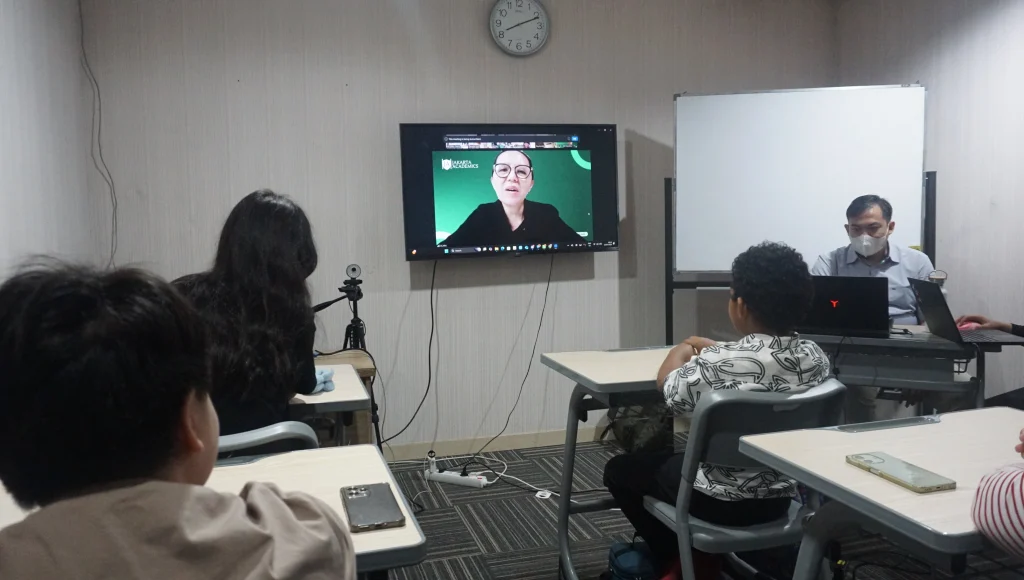
  • Distance Learning: Bagi yang membutuhkan fleksibilitas lebih, pembelajaran jarak jauh melalui platform online juga tersedia, memungkinkan siswa belajar dari mana saja.

Fleksibilitas ini memberikan kesempatan bagi setiap siswa untuk belajar dengan cara yang paling nyaman dan efektif bagi mereka.

4. Memiliki Staff Pengajar yang Berpengalaman Puluhan Tahun

Kualitas pengajaran sangat bergantung pada pengalaman dan kompetensi pengajarnya. Di Jakarta Academics, Anda tidak perlu khawatir mengenai hal ini. Semua pengajar di Jakarta Academics memiliki pengalaman lebih dari puluhan tahun di bidang pendidikan. Pengalaman yang luas ini memungkinkan mereka untuk mengadaptasi metode pengajaran dengan lebih efektif, menciptakan suasana belajar yang menyenangkan dan produktif.

Para pengajar ini tidak hanya ahli dalam bidangnya, tetapi juga terlatih untuk mengidentifikasi dan mengatasi tantangan yang dihadapi oleh siswa selama proses pembelajaran. Dengan pengalaman yang mumpuni, mereka mampu memberikan perhatian yang lebih pada setiap siswa, menjadikan proses belajar lebih maksimal.

5. Kelas Vokasi dan Entrepreneurship yang Membekali Keterampilan Praktis

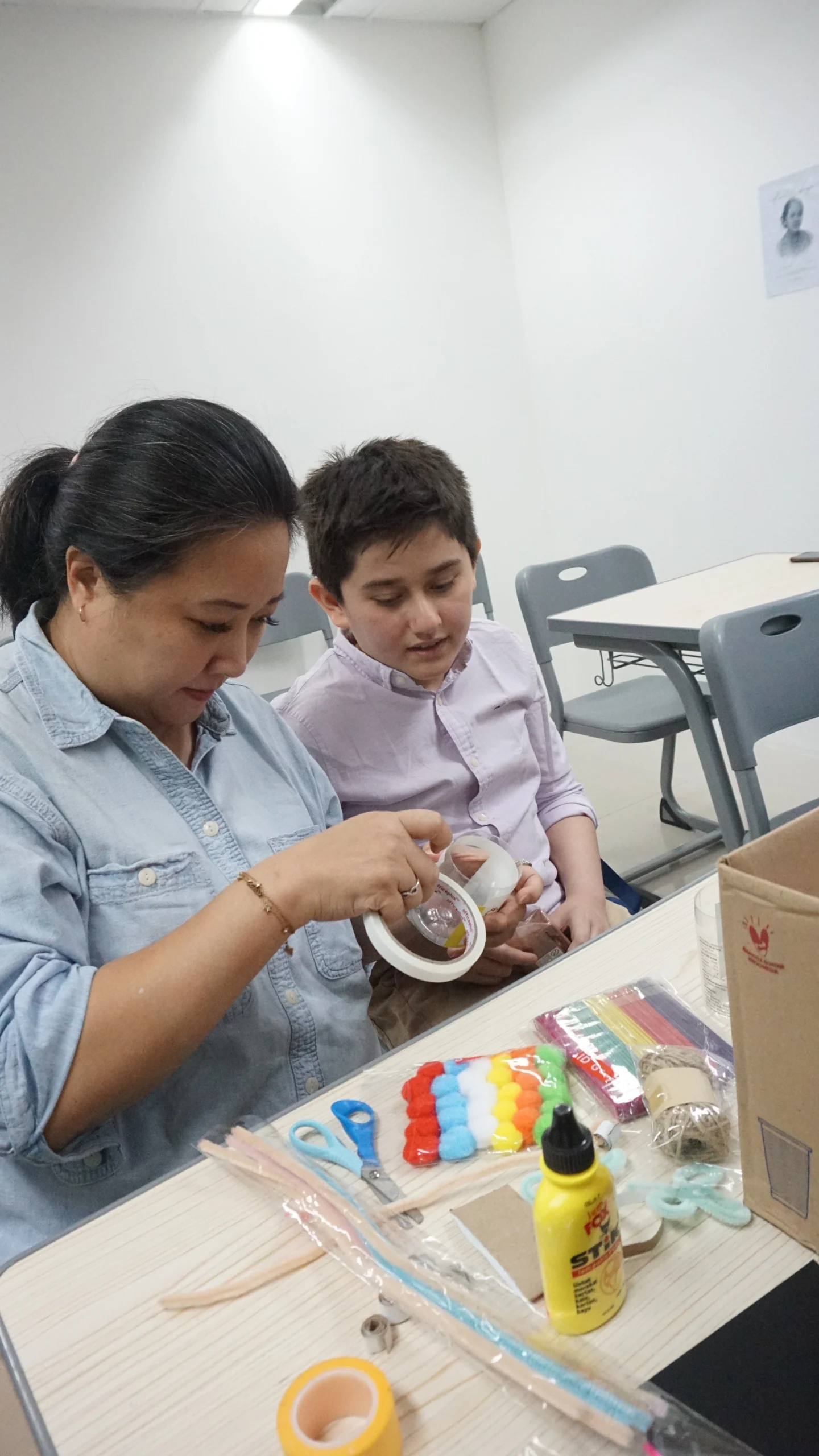
Jakarta Academics tidak hanya fokus pada pengajaran akademik, tetapi juga menawarkan kelas vokasi dan entrepreneurship yang membantu siswa mengembangkan keterampilan praktis. Kelas-kelas ini dirancang untuk mempersiapkan siswa agar lebih siap terjun ke dunia kerja atau membangun bisnis sendiri. Materi yang diberikan meliputi keterampilan teknis dan soft skills yang sangat dibutuhkan dalam dunia profesional.

Dengan menambahkan aspek vokasi dan entrepreneurship dalam kurikulum mereka, Jakarta Academics memberikan peluang bagi siswa untuk mengembangkan minat dan bakat mereka dalam bidang yang lebih spesifik, sehingga mereka dapat menghadapi masa depan dengan lebih siap dan percaya diri.

Kesimpulan
Homeschooling Internasional

Jika Anda mencari homeschooling akreditasi A di Jakarta yang menawarkan kualitas pendidikan terbaik, Jakarta Academics adalah pilihan yang tepat. Dengan kelebihan seperti kurikulum internasional dan nasional, metode belajar fleksibel, pengajar berpengalaman, serta kelas vokasi dan entrepreneurship, Jakarta Academics mampu memberikan pengalaman belajar yang lebih berkualitas dan sesuai dengan kebutuhan siswa. Jadi, segera pilih Jakarta Academics untuk pendidikan terbaik bagi anak Anda!
 

Recent Post

Education in the Age of AI: How JA School Bali Approaches the Future of Learning

The world today’s children will grow up in may look very different from the one we know today. Technology is advancing rapidly, artificial intelligence (AI) is becoming part of everyday life, and the way people find information, work, and solve problems continues to evolve.

Amid these changes, many parents are beginning to look at education from a different perspective. It is no longer just about academic grades or how quickly a child can understand a lesson, but also whether they are developing the ability to think independently, adapt, and navigate unfamiliar situations.

The question is, are the ways children learn at school today enough to prepare them for a world that is constantly changing?

When children can find answers anywhere, what do they really need to learn?

Children today have access to an enormous amount of information. They can look up answers, watch tutorials, learn a new language, or explore topics that once seemed difficult, all through the internet.

However, having access to information does not necessarily mean understanding it.

Children still need to learn how to ask meaningful questions, distinguish between reliable and unreliable information, understand the reasoning behind an answer, and develop their own ideas. These skills require more than reading or memorising. They develop through discussion, experimentation, making mistakes, and finding ways to solve problems.

This is why learning experiences that encourage curiosity are becoming increasingly important. Rather than simply receiving information from teachers, children should be actively involved in the learning process, understand what they are learning, and feel confident exploring new ideas.

This is one of the aspects of education that JA School Bali values, where learning is not only about academic achievement, but also about how students build understanding and grow through the process.

Learning should go beyond the classroom

Children may understand a concept through a textbook or a teacher’s explanation. However, when they have the opportunity to apply it in real situations, the experience can give them a much deeper understanding.

For example, when exploring a topic, students may take part in discussions, work on projects, share their opinions, or find solutions to a particular challenge. They begin to connect theory with everyday life while learning that not every problem has a single answer.

Through these experiences, children can develop critical thinking, creativity, communication, and problem-solving skills. They learn to work with others, express their ideas more confidently, listen to different perspectives, and recognise that making mistakes is part of learning.

For parents looking for an international school in Bali, this can be an important aspect to consider. Beyond the curriculum itself, it is worth looking at how learning takes place and whether children have meaningful opportunities to participate.

Not every child learns in the same way

Some children enjoy asking questions and joining discussions. Others understand lessons more easily through visual examples or demonstrations. Some need the opportunity to try things themselves before a concept truly makes sense.

These differences often become more noticeable in the classroom. Some students may follow a lesson straight away, while others need more time. Some are confident sharing their opinions, while others have plenty of ideas but are still learning how to express them.

This does not mean one child is more capable than another. Every child has their own personality, interests, and pace of development.

A supportive school environment can help children feel more comfortable learning, asking questions, and trying new things without constantly worrying about making mistakes. When they feel heard and valued, their confidence and motivation to learn can grow naturally.

For expat families living in Bali, this is also an important consideration. Children moving to a new country or environment may need time to adjust to a different language, culture, friendships, and daily routine. School is not only where they learn academically, but also where they build relationships and a sense of belonging.

Choosing an international school in Bali: What should parents consider?

Bali is home to families with diverse backgrounds, cultures, and lifestyles. Some families are local and looking for an international approach to education, while others are expats settling in for the long term or relocating for work and lifestyle reasons.

When choosing a school, the curriculum is naturally one of the main considerations. However, parents should also look at how that curriculum is delivered in everyday learning.

How do teachers interact with students? Are children encouraged to ask questions and share their ideas? Do classroom activities help them understand concepts rather than simply complete assignments? How does the school support students when they struggle?

Questions like these can offer a much clearer picture of a child’s learning experience than looking at facilities or a list of programmes alone.

At JA School Bali, students follow the UK curriculum through Pearson Edexcel, with Primary and Secondary programmes. This curriculum provides a structured learning pathway, while the school experience itself plays an important role in helping students build knowledge, develop skills, and discover their interests.

For parents comparing international schools in Bali, getting to know a school’s programmes in person can help them understand whether its approach and environment are suited to their child’s needs.

Why is the UK curriculum a choice for many families?

One of the reasons the UK curriculum appeals to some families is its clear learning structure. Students study a range of subjects through progressive stages, building their academic understanding and developing their abilities as they move through each level.

Through Pearson Edexcel, students follow a curriculum with established academic standards and a structured approach to learning. However, a child’s educational experience is not determined by the curriculum alone. How teachers deliver lessons, the classroom atmosphere, student engagement, and the support they receive throughout the learning process are equally important.

Combining a structured curriculum with meaningful learning experiences can help children build a strong foundation, both academically and in the way they understand the world around them.

For families who have previously lived in another country or may relocate in the future, an international curriculum can also be an important consideration in maintaining continuity in their child’s education.

A good education is not only about what children achieve, but how they grow

Every parent wants their child to grow and have a promising future. However, a child’s progress is not always reflected in grades or achievements that can be measured immediately.

Sometimes, progress can be seen in the simplest things. A child who was once afraid to ask questions begins to share their thoughts. A child who struggled to work with others learns to listen. A child who used to give up easily starts trying again when faced with a challenge.

These moments are an important part of the school experience. The ability to believe in themselves, manage challenges, work with others, and remain curious will help children in many aspects of life.

At JA School Bali, students’ learning journeys through Primary and Secondary are not simply about following lessons. They are also about building the knowledge, skills, and confidence that will continue to support them as they grow.

Finding the right learning environment for your child

There is no single school that is automatically the best choice for every child. What works for one family may not necessarily be the right fit for another.

Some parents look for an international curriculum with a clear academic structure. Others prioritise a supportive learning environment. Some want their children to have an educational experience that encourages independence, creativity, and active participation.

Choosing a school should therefore go beyond what is visible from the outside. Understanding the classroom atmosphere, getting to know the teachers, observing how students interact, and learning about the school’s educational approach can help parents make a more informed decision.

If you are looking for an international school in Bali for your child, JA School Bali may be worth exploring. With Primary and Secondary programmes based on the Pearson Edexcel UK curriculum, parents can discover how the school’s learning approach and environment support their child’s educational journey.

Ultimately, education is not just about preparing children for their next lesson. It is about helping them grow into individuals who are curious, confident, capable of thinking independently, and unafraid of change.

Because we may not know exactly what the world they will face looks like. But the ability to keep learning will always be a valuable skill.

Does Digital Social and Emotional Learning Work in Schools? What 35 Randomized Trials Tell Us

Schools are being asked to support students’ emotional well-being as well as their grades, and many are turning to technology to do it. Apps, serious games, virtual reality and online platforms all promise to teach empathy, self-control and healthy relationships at scale. But do digital social and emotional learning (SEL) programs actually work?

A systematic review published in the journal Children in November 2026 looked at the best available evidence. Here is what it found, in plain language.

What Is Social and Emotional Learning?

SEL is how children and teenagers build the skills to understand their emotions, get along with others, show empathy and make responsible choices. The most widely used model comes from CASEL, the Collaborative for Academic, Social, and Emotional Learning. It groups SEL into five competencies:

  1. Self-awareness
  2. Self-management
  3. Social awareness
  4. Relationship skills
  5. Responsible decision-making

Research links these skills to better school performance, fewer behavior problems and stronger well-being. That is why schools are paying attention to them.

About the Review

The team, led by researchers at the University of West Attica in Greece, searched five major databases for randomized controlled trials of school-based digital SEL programs. They included only trials held on school premises, and they followed the PRISMA 2020 reporting standard.

  • 35 trials met the criteria, covering 15,026 students from preschool to late secondary school.
  • The trials came from the United States, the United Kingdom, Australia, Portugal, Romania, Italy, China, Taiwan, Malaysia, Iran, Colombia, Chile, Argentina and Uruguay.
  • 25 of the 35 trials found an advantage for the digital program on at least one outcome.
  • The technologies included serious games, gamified lessons, mobile and tablet apps, web platforms and virtual reality.

Fully Digital vs. Blended Programs

The review sorted programs into two types:

  • Fully digital (13 programs): students used the program directly, with adults giving only technical help or a short introduction.
  • Blended (22 programs): the technology was built into lessons led by a teacher, counselor or psychologist, or it supported the adults who delivered the program.

Many people assume blended programs work better because a human is involved. The review could not confirm that. No trial compared fully digital and blended versions of the same program, and the two groups also differed in student age, outcomes measured and who reported the results. Any difference between them cannot be put down to delivery format.

Which Skills Improved Most?

Results were strongest for social skills and weaker for inner emotional skills.

  • Relationship skills were the most consistent area. 14 of the 22 trials that targeted this skill reported a clear advantage over the comparison group. Examples included more prosocial behavior, better cooperation and less bullying and loneliness.
  • Self-awareness was the least consistent. Only 6 of 23 trials that targeted it reported a between-group advantage.
  • Self-management and emotion regulation showed benefits in fewer than half of the trials that targeted them, though the direction of results was positive in nearly all of the trials that measured it.
  • Responsible decision-making had limited evidence, with only eight trials targeting it.

Some programs produced clear results. A tablet-based serious game, Adventures Aboard the S.S. GRIN, improved third graders’ social–emotional skills in a trial of 1,645 students. A virtual reality program, REAL™, was linked to better emotion regulation and lower depression and anxiety in 13- to 14-year-olds. Others found nothing. The fully digital e-couch anxiety program, tested in 30 schools, showed no significant difference from a waitlist.

What About Anxiety and Depression?

Evidence here is much weaker. Eight trials measured anxiety or depressive symptoms, and results were mixed. Several relied on self-report, and some had risk-of-bias concerns. The reviewers rated confidence in these outcomes as very low. Digital SEL should not be treated as a substitute for mental health care.

How Strong Is the Evidence?

The authors used the GRADE system to rate certainty:

  • Overall social–emotional competence: moderate certainty
  • The five CASEL competencies: low certainty
  • Well-being: low certainty
  • Emotional and behavioral difficulties (including anxiety and depression): very low certainty

Two limitations stand out. Only 9 of the 35 trials (26%) were registered before they began, which makes selective reporting harder to rule out. And the trials varied too much in comparison groups, measures and reporting to be combined in a meta-analysis, so the review counts the direction of results rather than estimating how large the effects are.

What This Means for Schools and Parents

The review supports a cautious, practical approach:

  • Treat digital SEL as promising, not proven. The evidence is encouraging for overall social–emotional competence, but it is early.
  • Don’t assume technology replaces teachers. The review did not test whether adult support makes digital programs work better, so schools should not cut human involvement on the assumption that it makes no difference.
  • Choose programs with trial evidence. Look for randomized results, clear outcome measures and, ideally, trial registration.
  • Match the program to the age group. Programs in the review ranged from tablet games for four-year-olds to online modules for high schoolers.
  • Measure results locally. Even good programs showed uneven effects across countries and outcomes, so schools should track whether a program works for their students.

What Research Needs Next

The authors call for larger, longer trials that compare fully digital and blended versions of the same program directly, within specific age groups, and that report effect sizes with confidence intervals. Until then, the question of whether a human touch improves digital SEL stays open.

Frequently Asked Questions

What is digital SEL?

It is social and emotional learning delivered through technology such as serious games, apps, virtual reality or online platforms, either alone or alongside teacher-led lessons.

Does digital SEL improve student behavior?

The review found the most consistent benefits for relationship skills, such as prosocial behavior and cooperation. Findings for behavior problems were less consistent.

Is blended SEL better than fully digital SEL?

Unknown. No trial has compared the two formats for the same program.

Can digital SEL treat anxiety or depression?

The evidence is very uncertain. Some trials showed reductions, others showed none, and confidence in these results is very low.

Source: Gkora, V., Galanaki, E., Drigas, A., Vassilakou, T., Trimmi, K., & Merakou, K. (2026). Digital School-Based Social and Emotional Learning Interventions for Children and Adolescents: A Systematic Review of Randomized Controlled Trials with a Descriptive Comparison of Fully Digital and Blended Delivery. Children, 13(11), 1607. https://doi.org/10.3390/children13111607

International Microschool in Bali: A Personalised Approach to Mathematics, Science, and English at JA School Bali

Choosing the right school is one of the most important decisions for parents. For families living in Bali, both local and expatriate, finding a school that meets their child’s needs is an essential part of preparing for their future. Today, parents are looking for more than just a school with a good curriculum. They want a learning environment where children can develop academic skills, build confidence, and discover their potential. One educational approach that is becoming increasingly interesting for families to explore is the international microschool. By combining international education with a more personalised learning environment, microschools offer an interesting option for families looking for a meaningful educational experience for their children.

At JA School Bali, learning focuses on developing strong academic foundations, particularly in Mathematics, Science, and English, while encouraging students to think critically, explore new ideas, and develop independence. For parents searching for an international school in Bali, understanding this approach can help them find a learning environment that suits their child’s needs.

What Is an International Microschool?

An international microschool is an educational approach that combines the principles of international education with a smaller, more personalised learning environment. Microschools generally emphasise closer interaction between teachers and students, smaller learning groups, and attention to each child’s individual needs and development. In this type of learning environment, students have opportunities to ask questions, participate in discussions, express their ideas, and develop a deeper understanding of what they learn.

Learning is not only about completing assignments or finding the correct answers. It is also about helping children understand how concepts work and how knowledge can be applied in everyday situations. For families living in Bali, an international microschool can be an interesting educational option, especially for parents looking for international learning experiences, English-language development, and strong academic foundations. However, every school has its own approach. Parents should therefore understand how the curriculum, teaching methods, and school environment support their child’s development.

Why Is Personalised Learning Important for Children?

Every child has a different way of learning, different interests, and different educational needs.

Some children understand mathematical concepts quickly but need more time to develop their writing skills. Others enjoy Science and exploration but may need additional support with certain academic concepts. A personalised learning approach helps teachers understand these differences and provide support that is appropriate for each student’s development.

When children have opportunities to ask questions, explore ideas, and understand learning materials more deeply, they can develop greater confidence in their learning abilities. For parents, a supportive learning environment is also important, particularly when children are adjusting to a new community or educational setting. This can be an important consideration for both Indonesian families and expatriate families looking for a school in Bali.

International Curriculum: Building Strong Academic Foundations

International education is not only about using English as the language of instruction. An international curriculum can also provide a structured learning experience that helps students develop knowledge, thinking skills, and academic abilities progressively. Strong academic foundations help children understand different concepts and prepare them for further education.

At JA School Bali, Mathematics, Science, and English are important areas of focus in developing students’ academic abilities. These three subjects support one another in helping children understand information, develop thinking skills, and communicate more confidently.

Mathematics: Developing Logical Thinking and Problem-Solving Skills

Mathematics is one of the most important foundations of a child’s education. More than simply calculating numbers or memorising formulas, Mathematics helps students understand patterns, analyse information, and find solutions to different problems. These skills are useful across many areas, including Science, technology, economics, and everyday life. Through Mathematics learning, students can develop logical thinking and understand how concepts can be applied in real situations.

For example, children can explore Mathematics through measuring, comparing quantities, understanding data, or making simple plans. These experiences help students see that Mathematics is not just a classroom subject. It is also a skill they can use in everyday life. For parents looking for an international school in Bali, strong mathematical foundations are an important part of supporting their child’s academic development.

Science: Encouraging Curiosity and Exploration

Children naturally want to understand the world around them. Why do plants grow? How does the environment change? Why do different materials have different properties? Science gives students opportunities to explore these questions through observation, investigation, and critical thinking. Meaningful Science learning helps children understand scientific concepts while developing the ability to ask questions, make predictions, and consider evidence. Through relevant learning experiences, students can connect Science concepts with everyday life.

For example, they can explore nature, understand the environment, learn about different materials, or discover how technology is used in the modern world. This approach helps children see Science as interesting, relevant, and connected to the real world. In addition to building academic knowledge, Science encourages students to develop curiosity and systematic thinking.

English: Building Confidence in Communication

English is an important part of international education. For children learning in an international school environment in Bali, English can support academic learning, communication, and future educational opportunities. However, learning English is not only about understanding vocabulary and grammar. Students also need to develop their reading, writing, listening, and speaking skills.Reading helps children understand information and develop critical reading skills. Writing helps students organise their thoughts and communicate ideas clearly. Speaking and listening give children opportunities to communicate, participate in discussions, and build confidence.

For expatriate families, English-language learning can also help children adapt to an international educational environment. For Indonesian families, these skills can become an important foundation for developing communication abilities and preparing children for future opportunities. Strong English skills can support both academic and personal development.

Learning Beyond the Classroom: Connecting Learning with Real Life

Meaningful learning does not only happen inside the classroom. Children also need to understand how the knowledge they learn can be applied in everyday situations. Mathematics can help students understand budgeting, measurement, and planning. Science can encourage them to explore nature, understand the environment, and develop curiosity. English helps students communicate ideas, participate in discussions, and interact with others. When students connect classroom learning with real experiences, they have opportunities to understand concepts more deeply.

At JA School Bali, the learning experience aims to support academic development while helping students build important skills such as critical thinking, communication, creativity, and independent learning. These skills can help children become more confident learners and prepare them for different educational experiences in the future.

Is an International Microschool in Bali Right for Your Child?

Every family has different educational priorities. Some parents are looking for a school with an international curriculum. Others want their children to strengthen their academic foundations, improve their English, or experience a more personalised learning environment.

An international microschool may be an interesting option for families who value:

  • Strong academic foundations in Mathematics, Science, and English.
  • A learning environment that supports student development.
  • Opportunities to develop critical thinking and problem-solving skills.
  • English-language learning in an international educational setting.
  • Learning experiences that encourage curiosity and independence.
  • A school environment where children can build confidence.

For families moving to Bali, it is also important to consider how a school supports children as they adjust to a new environment. Understanding the curriculum, speaking with teachers, and visiting the school can help parents determine whether the learning approach meets their child’s needs.

Discover JA School Bali

Finding the right school means understanding how an educational environment can help children learn, develop, and build confidence. At JA School Bali, we believe education should help students build strong academic foundations while developing the skills they need for the future. With a focus on Mathematics, Science, and English, students have opportunities to strengthen their knowledge, explore new ideas, and develop a deeper understanding of the world around them.

For Indonesian families and expatriate families looking for international education in Bali, JA School Bali is an opportunity to explore a learning environment that supports academic development. Whether you are moving to Bali, exploring international school options, or looking for a different educational approach for your child, getting to know the school’s learning environment can be an important first step.

Give your child the opportunity to build strong academic foundations, develop confidence, and grow through meaningful learning experiences. Contact JA School Bali to learn more about our educational approach, curriculum, and learning opportunities for your child. Discover whether JA School Bali is the right learning environment for your family’s educational needs.